
Cockapoo coats come in four types: flat, straight, wavy, and curly. Compare shedding, brushing, and clipping for each, and learn how to identify yours.
Quick answer: A Cockapoo flat coat is straight, silky, Spaniel-like hair that sheds the most of the four coat types and needs the least grooming. Straight coats shed lightly, wavy coats shed very little but mat easily, and tight Poodle curls shed least but need daily brushing. No coat type guarantees a non-shedding or allergy-free dog.
Ask ten Cockapoo owners what their dog’s coat looks like and you will get ten different answers: tight curls, soft waves, loose ripples, silky straight hair. All of them are right, because Cockapoos do not have one coat. They have four, inherited in different proportions from their Cocker Spaniel and Poodle parents, and the coat your puppy grows into decides how much it sheds, how often it needs brushing, and how much grooming will cost you.
Competitor pages mention coat types only in passing — a few lines inside a big breed guide, or a short list on a groomer’s page. This guide puts all four coats side by side, with honest shedding and maintenance ratings, so you can identify your dog’s coat, set a realistic grooming routine, and stop guessing about allergies.
The Four Cockapoo Coat Types at a Glance
| Coat type | Looks like | Shedding | Brushing | Professional clipping |
|---|---|---|---|---|
| Flat coat | Straight, silky, Spaniel-like | Most of the four | 2–3 times a week | Rarely needed; tidying only |
| Straight coat | Gentle, loose waves | Low to medium | 2–3 times a week | 3–4 times a year |
| Wavy coat (ringlet) | Soft curls, teddy-bear look | Very little | 3–5 times a week | Every 6–8 weeks |
| Poodle coat (tight curl) | Tight corkscrew curls | Least | Daily | Every 4–6 weeks |
Read the table as a starting point, not a promise. Individual dogs vary, coats change with age, and a dog can sit between two types. But the pattern holds: the straighter the coat, the more it sheds and the less it mats; the curlier the coat, the less it sheds and the more it mats. That trade-off is the single most useful idea in this guide.
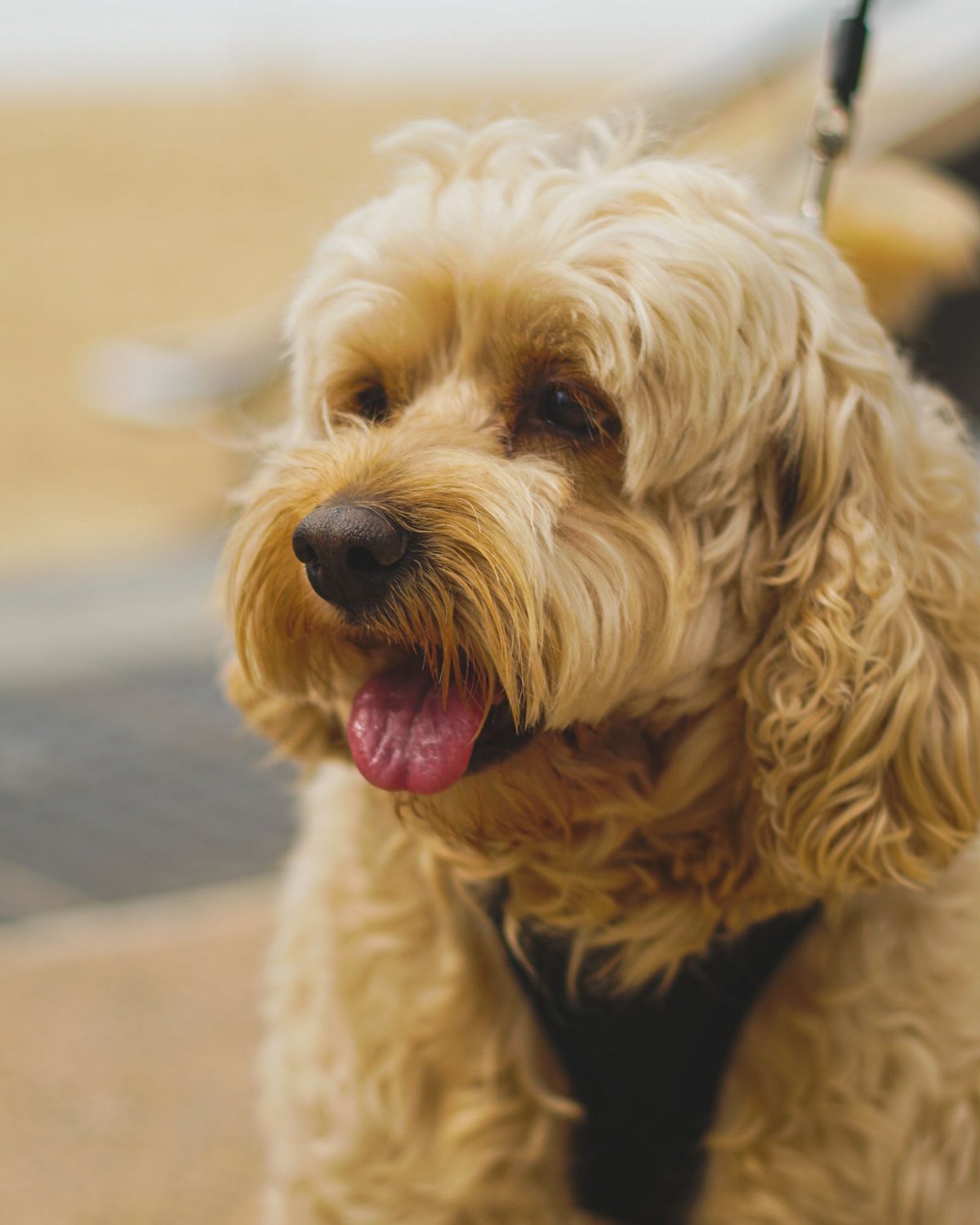 CockapooDaily
The Flat Coat: Straight, Silky, and Shedding
The flat coat is the most Cocker Spaniel-like of the four. The hair lies fairly straight and silky, with little curl, and it behaves much like a Spaniel coat: it sheds, it is relatively easy to brush, and it does not usually need clipping to stay comfortable.
Shedding: The flat coat sheds the most of the four types. It will not shed like a Labrador, but you will find hair on clothes, furniture, and car seats, especially in spring and fall when seasonal shedding increases. Owners who chose a Cockapoo expecting no shedding are most often surprised by a flat-coated dog.
Brushing: Two to three times a week with a slicker brush or pin brush is usually enough. The goal is to remove loose hair before it lands on your sofa, and to check for the occasional tangle behind the ears and under the legs, where even straight coats can knot.
Clipping: Most flat-coated Cockapoos do not need regular full-body clipping. Tidying around the eyes, ears, paws, and sanitary area is usually enough, with a bath every few weeks or when dirty. If your groomer suggests a full clip, ask why; a flat coat rarely needs one for comfort.
Allergy honesty: A flat coat is the least suitable Cockapoo coat for allergy sufferers. It sheds more, which spreads dander around the home, and it does not trap loose hair the way curls do. If allergies are a major reason for choosing a Cockapoo, a flat-coated puppy is the riskiest choice, and spending time around adult dogs from the same line before committing is especially important. For the full shedding picture, see our guide to do Cockapoos shed.
The Straight Coat: Loose Waves, Middle Ground
The straight coat is sometimes grouped with the flat coat, but it deserves its own row: it has gentle, loose waves rather than truly straight hair, and it sits in the middle on almost every measure.
Shedding: Low to medium. You will see some hair, but far less than with a flat coat, and many owners find it manageable with regular brushing.
Brushing: Two to three times a week, with attention to the feathering on the ears and legs, where loose waves can tangle if neglected.
Clipping: About three to four times a year, or roughly every 3–4 months, keeps a straight coat neat. Between clips, tidying around the face and paws keeps the dog comfortable and able to see clearly.
Who it suits: Owners who want lower maintenance than a curly coat but less shedding than a flat coat. The straight coat is the compromise coat, and for many families it is the easiest Cockapoo coat to live with day to day.
The Wavy Coat: The Classic Teddy Bear
The wavy coat, also called the ringlet or fleece coat, is the most common Cockapoo coat and the one most people picture when they think of the breed: soft, loose curls that give the famous teddy-bear look.
Shedding: Very little. Loose hairs get trapped in the curls instead of falling on your floor, which is why wavy-coated Cockapoos look low-shedding. That trapped hair is also why the coat needs more work: hair that does not fall out must be brushed out, or it mats.
Brushing: Three to five times a week, working in sections down to the skin, not just over the top of the coat. The danger spots are behind the ears, under the collar, in the armpits, and behind the legs, where friction creates mats first. A slicker brush followed by a metal comb — if the comb glides through, the section is mat-free — is the standard routine.
Clipping: Every 6–8 weeks for a full groom, with tidying in between. Wavy coats grow continuously, so without regular clipping they become long, heavy, and prone to matting, especially in wet weather.
Who it suits: Owners who enjoy grooming and want the classic Cockapoo look. The wavy coat is beautiful and low-shedding, but it is not low-maintenance, and that distinction catches many new owners by surprise.
The Poodle Coat: Tight Curls, Highest Maintenance
The tight Poodle coat, sometimes called the wool coat, has dense corkscrew curls and is the most Poodle-like of the four. It sheds least and demands most.
Shedding: Least of the four. Very little hair reaches your furniture, because shed hair stays locked in the curls. This is the coat most often associated with “hypoallergenic” claims, with the caveat in the next section.
Brushing: Daily, and properly. Daily brushing for a tight curl means line brushing: parting the coat in sections and brushing each section down to the skin. Brushing only the surface leaves mats forming underneath, which is how a dog ends up needing a full shave-down at the groomer.
Clipping: Every 4–6 weeks. Tight curls grow fast, mat fast, and hide skin problems underneath, so regular professional grooming is not optional for this coat; it is part of basic care. Grooming costs follow the same pattern: the curlier the coat, the more time a groomer spends, and the more visits you need. For what grooming actually costs in the United States, see our Cockapoo grooming cost guide.
Who it suits: Owners who are committed to daily grooming, or who are prepared to keep the coat short. A short clip on a tight curl is a perfectly good choice: it keeps the dog comfortable, makes brushing easier, and still sheds very little.
How to Tell Which Coat Your Cockapoo Has
Puppy coats are not a reliable guide. Most Cockapoo puppies start with a soft, fluffy coat that changes as the adult coat comes in, usually between about 8 and 12 months, sometimes later. A puppy that looks wavy at 4 months can grow into a tighter curl, and a flat-looking puppy rarely grows curls it never had. Judge the coat you see at a year old, not the one you saw at pickup.
Use these checks on a dry, clean coat:
Look at the shape. Flat hair lies straight and silky. Straight hair has gentle waves. Wavy hair forms soft ringlets. Tight curls form dense corkscrews that spring back when pulled gently.
Check the shedding. Brush the dog over a dark surface. A flat coat leaves visible hair after a few strokes. A wavy or curly coat leaves very little, because the hair stays in the coat.
Check the matting. Run a metal comb through the coat behind the ears and under the legs. If it glides through, the coat is well maintained for its type. If it snags, there are mats forming underneath, whatever the coat type.
Ask the groomer. A groomer who sees your dog regularly can usually name the coat type in seconds, and can tell you whether the routine you are using fits it. If your groomer says “this coat needs more brushing than you are doing,” believe them; they see the mats before you do.
Coat Type and Allergies: The Honest Version
No dog is truly hypoallergenic, and no Cockapoo coat type guarantees an allergy-free home. The allergen is mainly a protein in dander and saliva, not in the hair itself. A low-shedding coat spreads less dander around the house because less hair falls out, but the dog still produces dander, and sensitive people can still react.
That said, coat type does shift the odds. Tight curls and wavy coats tend to be easier for mild allergy sufferers to live with, because less hair and dander drifts onto furniture and clothes, and because regular bathing and brushing remove dander before it spreads. Flat and straight coats tend to be harder, because more hair falls and carries dander with it.
If allergies are a deciding factor, do not choose by coat label alone. Spend real time around adult Cockapoos, ideally from the same line and with the same coat type, and see how you react. No breeder can test a puppy for your allergies in advance, and any promise of a “guaranteed hypoallergenic” puppy should be treated as a red flag. For the broader allergy question, see our guide to are Cockapoos hypoallergenic.
Puppy Coat Change: What to Expect
Most owners are surprised by the puppy-to-adult coat change, so it deserves its own warning. Around the time the adult coat comes in, the puppy coat sheds out, tangles increase, and the coat can look patchy or dull for a few weeks. This is normal, and it is the period when matting risk is highest, because two coat types are present at once and neither brushes out cleanly.
During the change, brush more often, keep sessions short and positive, and consider a groomer visit for a tidy-up rather than waiting for the adult coat to settle. Do not judge the adult coat type until the change is complete, and do not promise yourself — or a buyer — a particular adult coat based on a young puppy’s fluff. The coat in front of you at a year old is the coat you will groom for the next decade.
Choosing a Grooming Routine by Coat
A simple routine per coat type keeps this guide practical:
Flat coat routine: Brush 2–3 times a week, bath when dirty, tidy face, ears, paws, and sanitary area as needed, and check for seasonal shedding increases in spring and fall.
Straight coat routine: Brush 2–3 times a week, bath every 4–6 weeks or when dirty, professional clip 3–4 times a year, and tidy feathering on ears and legs between visits.
Wavy coat routine: Brush 3–5 times a week in sections to the skin, bath every 4–6 weeks, professional groom every 6–8 weeks, and check mat-prone spots (behind ears, armpits, behind legs) at every brushing.
Poodle coat routine: Brush daily with line brushing, bath every 3–4 weeks, professional groom every 4–6 weeks, and keep the coat at a length you can honestly maintain — shorter is kinder than matted.
Across all coats, the same basics apply: brush before bathing (wet mats tighten), dry the coat fully after baths, trim hair around the eyes so the dog can see, and check ears regularly, since Cockapoo ears trap moisture regardless of coat type. For how coat color interacts with coat type — and why a puppy’s color can shift as it grows — see our guide to Cockapoo colors.
Frequently Asked Questions
What is a Cockapoo flat coat?
A flat coat is straight, silky, Spaniel-like hair that sheds the most of the four Cockapoo coat types and needs the least grooming. It rarely needs full-body clipping, just tidying and regular brushing.
Which Cockapoo coat sheds the least?
The tight Poodle coat sheds least, followed by the wavy coat. Flat coats shed most, and straight coats sit in the middle. No coat sheds nothing at all.
Do Cockapoo coats change from puppy to adult?
Yes. Most puppies start with a soft, fluffy coat that changes as the adult coat comes in, usually between 8 and 12 months. Judge the adult coat type at a year old, not at pickup.
Is a flat-coated Cockapoo hypoallergenic?
No coat type is truly hypoallergenic. Flat coats shed more and spread more dander, so they are the least suitable choice if allergies are a major concern. Spend time around adult dogs before deciding.
How often should I brush a wavy-coated Cockapoo?
Three to five times a week, working in sections down to the skin, with a professional groom every 6–8 weeks. Wavy coats trap shed hair, so brushing is what prevents matting.
Conclusion
There is no single Cockapoo coat, and there is no best coat in the abstract — only the coat your dog has, and the routine that fits it. Flat coats shed more and groom easily. Straight coats sit in the middle. Wavy coats give the classic teddy-bear look at the cost of frequent brushing. Tight curls shed least and demand daily care. Identify your dog’s coat honestly, match the routine to it, and keep the coat at a length you can actually maintain. A well-kept coat of any type beats a matted coat of the “best” type, every time.


Leave a Reply