
Every cockapoo color and pattern explained — solids, parti, phantom, sable, merle — plus the fading chart that shows what your puppy’s color becomes as an adult.
Quick answer: Cockapoos come in seven core solid colors — apricot, red, cream, chocolate, black, white, and buff — plus patterns including parti, phantom, tuxedo, tri-color, sable, and roan. The catch nobody warns buyers about: thanks to the Poodle fading gene, many puppies change color dramatically as adults. The chocolate puppy in the listing may grow up café-cream.
Color is the first thing buyers fall for and the thing they understand least. Cockapoo color isn’t complicated, but it is governed by two parent breeds’ genetics colliding — and by one Poodle trait, progressive fading, that can completely repaint a dog between puppyhood and age three. This guide covers every color and pattern, decodes the breeder vocabulary, and shows you how to predict the adult dog hiding inside the puppy’s coat.
The Solid Colors
| Color | What it looks like | Good to know |
|---|---|---|
| Apricot | Warm peachy gold, light to rich | The most in-demand color; recessive — both parents must carry it; often lightens toward cream |
| Red | Deep mahogany to rich rust | Apricot’s darker sibling; frequently fades to apricot by adulthood; carries a price premium |
| Cream | Pale ivory to warm off-white | Sometimes born darker and lightens; shows tear staining and dirt honestly |
| Buff / Tan | Sandy gold, the classic Cocker shade | The spaniel heritage color; usually stable, may deepen slightly |
| Chocolate | Rich brown, from milk to dark | Nose and eye rims are brown/liver too; the most dramatic fader — see the chart below |
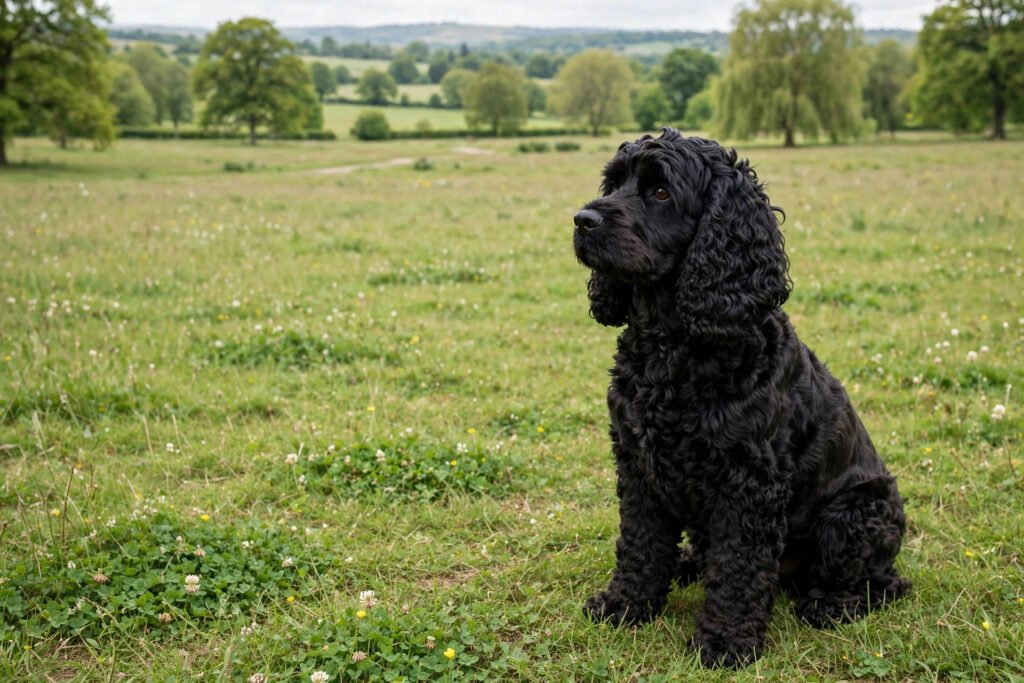
| Black | True jet to soft charcoal | Some stay jet for life; many “clear” to silver or blue-gray over 2–3 years |
| White | Pure white to ivory | No fading surprises, but the highest-maintenance look — every mud puddle and tear stain is on display |
 CockapooDaily
 CockapooDaily
 CockapooDaily
 CockapooDaily
The Patterns
Patterns are where breeder vocabulary gets dense, so here are the definitions the American Cockapoo Club standard uses, in plain English:
| Pattern | Definition |
|---|---|
| Parti | White base with patches of any other color — at least half white |
| Phantom | Solid base color with contrasting (usually tan/cream) points: eyebrows, muzzle sides, chest, legs, under the tail — the Doberman/Rottweiler marking map |
| Tuxedo / Abstract | Mostly solid with a white chest blaze and small white touches (chin, toes) — less white than a parti |
| Tri-color | Parti pattern plus phantom points — white, a solid color, and tan markings together |
| Sable | Dark-tipped hairs over a lighter undercoat; puppies look dark and “clear” dramatically lighter from the roots outward |
| Roan | White hairs evenly mixed through a colored coat (the Cocker Spaniel specialty), giving a frosted, blended look |
| Merle | Mottled, patchy dilution of color — blue-gray or chocolate marbling. Read the merle section below before falling for one |
 CockapooDaily
 CockapooDaily
The Fade: Why Your Puppy Won’t Keep Its Color
Poodles carry a progressive graying (fading) gene, and cockapoos inherit it unpredictably. It doesn’t switch the coat overnight — it dilutes it gradually, starting in the first months and continuing until roughly age 2–3. The results, color by color:
| Puppy color (8 weeks) | Likely adult color |
|---|---|
| Dark chocolate | Café / silver-beige / light brown — sometimes barely recognizable |
| Black (with fading gene) | Silver, blue-gray, or charcoal by age 2–3 |
| Black (no fading gene) | Stays black |
| Deep red | Apricot, occasionally cream |
| Apricot | Cream to off-white in many lines |
| Sable | Much lighter overall — the dark tips are cut away at early grooms, revealing the pale undercoat |
| Cream / white / buff | Mostly stable — the “what you see is what you get” colors |
Two honest consequences. First, choosing a puppy primarily for a dark, rich color is the most common color disappointment in this breed — the prettiest chocolate puppy in the litter is often a beige adult. Second, this is not a breeder trick or poor breeding: it’s standard Poodle genetics, and good breeders will tell you upfront which of their lines fade and show you photos of previous puppies as adults.
Predicting adult color at a glance
- Parents first: look at the parents as they are now — a faded silver dam born black tells you the gene is there
- Check the ears: ear color often previews the adult body color over the first two years
- Part the fur: new growth at the roots shows the incoming shade before it takes over
- Ask the breeder: what did their last litters in these colors look like at two years old?
How to Predict a Puppy’s Adult Color
You can’t know exactly, but these four checks get you remarkably close:
- Look at the parents — as they are now, and as puppies if photos exist. A faded silver dam who was born black is telling you her puppies carry the gene.
- Check the ears. On many puppies the ear color previews the adult body color — the body “catches up” to the ears over the first two years.
- Part the fur and look at the roots. New growth at the skin shows the incoming shade before it takes over.
- Ask the breeder the direct question: “What did your last litters in these colors look like at two years old?” A breeder who tracks their puppies can answer with photos; one who can’t answer at all is a different kind of information.
Merle, Honestly
Merle cockapoos are striking, increasingly marketed — and worth one paragraph of candor. Merle exists in neither parent breed. Neither the Cocker Spaniel nor the Poodle carries the merle gene; it entered “cockapoo” lines through crossing with a merle-carrying breed (usually Australian Shepherd or a merle-carrying doodle line) somewhere in the pedigree. That doesn’t make a merle puppy a bad dog — it makes it not-quite-just-Cocker-plus-Poodle, and buyers paying a large premium for “pure cockapoo” genetics deserve to know it.
The health point is narrower and important: merle-to-merle breeding can produce double-merle puppies with serious deafness and eye defects. A single-merle dog from responsible breeding is typically healthy, but ask whether both parents were merle — if a breeder doesn’t know or doesn’t test, walk away. Any breeder premium for merle should buy documented parentage and testing, not just the pattern.
Breeder Color Names, Decoded
| Marketing name | What it actually is |
|---|---|
| Champagne | Very pale cream-gold |
| Blue | Black that has faded to blue-gray |
| Silver | Black or chocolate faded to bright gray |
| Café au lait / silver beige | Chocolate faded to creamy beige |
| Golden | Mid-tone apricot/buff |
| Teacup “rare white” | A white puppy — white is common and not a rarity |
None of these names are scams by themselves — several are legitimate Poodle color terms — but none of them should add hundreds to a price either. You’re paying for a shade name, not a different dog.
Color and Everyday Life
- Light coats show tear stains. Cream, white, and apricot dogs display the reddish-brown eye staining this breed is prone to far more visibly — the cause and routine are in our tear stains guide. If pristine looks matter, a darker coat is more forgiving.
- Dark coats sun-bleach. Black and chocolate coats can develop reddish, rusty tips in strong sun — cosmetic only, and groomers see it every summer.
- Color does not change care needs — coat type does. Brushing, matting, and shedding follow the curly/wavy/straight question (covered in our hypoallergenic guide), never the color.
- Color does change price. Red, phantom, and merle premiums are pure demand pricing — as broken down in our cockapoo cost guide. Pay it happily for a color you love; just know that’s what you’re paying for.
Frequently Asked Questions
What is a phantom cockapoo? A phantom is a pattern, not a color: a dark base coat (usually black, chocolate or red) with lighter markings — tan, cream or white — in specific places: eyebrows, muzzle, chest, legs and under the tail. The markings are sharpest in puppies and soften as the coat fades with age.
Are merle cockapoos healthy? Merle carries a real health warning: the merle gene can bring eye and hearing problems, and breeding two merles together (double merle) can produce puppies born blind or deaf. True merle does not occur in pure Poodle or Cocker Spaniel lines, so a merle Cockapoo has another breed somewhere in its background — buy only from a breeder who health-tests and never breeds merle to merle.
When do cockapoo colors start fading? Fading usually starts around 6 months, when the soft puppy coat gives way to the adult coat, and it is most dramatic between 6 months and 2 years. The cause is the Poodle fading gene (the G locus): a rich chocolate can fade to cafe-au-lait, a deep red to pale apricot, a solid black to silver-grey. By about 3 years the adult color has usually settled.
What is a parti cockapoo? A parti (parti-colored) Cockapoo has two or three colors in roughly even amounts — most often white plus one or two other colors. One color usually dominates (often white, cream or apricot) with the others covering the rest of the coat. Black-and-white is the best-known parti combination.
What is a sable cockapoo? A sable Cockapoo has hairs that are dark at the tip and lighter at the root, giving the coat a shaded, multi-tone look — often a darker back with lighter legs and belly. Sable puppies usually fade noticeably as the adult coat comes in, so a dark sable puppy often ends up much lighter.
What is the rarest cockapoo color?
True roan and genuine silver are among the rarest, with merle scarce legitimate lines making it rarer than listings suggest. Champagne (very pale cream-gold) is uncommon simply because it requires the lightest end of the cream range.
What is the most popular cockapoo color?
Apricot — by a wide margin. It’s the teddy-bear look most buyers picture, it’s recessive (so supply is limited), and waiting lists reflect both facts. Red is a close second.
Will my black cockapoo stay black?
Maybe. Blacks without the fading gene stay black for life; blacks with it clear gradually to silver or blue-gray by age 2–3. The parents’ adult colors and the root check are your best prediction tools — and no breeder can honestly guarantee either outcome at 8 weeks.
Does coat color affect a cockapoo’s temperament or health?
No. Temperament follows breeding, parents, and socialization — not pigment. The only color-linked health issue in this breed is the double-merle risk described above, which is a breeding issue, not something a single-merle pet carries.
Which cockapoo color is best for allergy sufferers?
Color is irrelevant to allergies — allergen spread is decided by coat type and generation, not shade. A curly black F1b and a curly cream F1b are equivalent; a straight-coated dog of any color is the harder one to live with. Details in the hypoallergenic guide.
The Bottom Line
Cockapoo colors are genuinely beautiful in every variant — seven solids, a shelf of patterns, and more variety than either parent breed offers alone. Just buy with the adult dog in mind: expect dark puppies to fade, treat dramatic breeder names as shade descriptions rather than rarities, ask the merle question out loud, and remember that the coat you’ll live with for 15 years is the grown one, not the eight-week one in the photograph.
Next: Color is only half of how a cockapoo looks — size is the other half: Toy vs Miniature cockapoo compares them side by side.



Leave a Reply