
Do cockapoos get cold in winter? Yes — here’s the exact temperature framework, the signs, coat and paw guidance, and the wet-plus-wind warning nobody gives.
Quick answer: Yes, cockapoos get cold. They have no dense insulating undercoat, so treat 45°F as the comfort line: above it, most are fine; 32–45°F means a coat and shorter walks; below 32°F add paw protection and keep outings brief; below 20°F is the danger zone for all but the briefest potty trips. Puppies, seniors, and freshly clipped dogs need protection sooner at every tier.
If you’re wondering whether that shivering on the morning walk means something — it does. Here’s the full winter playbook: exact temperatures, the signs, the gear decisions, and the one weather combo that’s more dangerous than deep cold.
Why Cockapoos Feel the Cold
The coat science, cleaned up: cockapoos grow hair, not fur — a single continuously-growing coat with no dense insulating undercoat. Undercoat is what keeps double-coated breeds warm; without it, cold reaches the skin fast. Add small body size (more surface area per pound = faster heat loss) and you have a breed built for companionship, not for January in Minnesota.
Wet makes everything worse: soaked hair loses what little insulation it had. A wet cockapoo in wind chills dramatically faster than a dry one in colder air.
The Temperature Tiers (°F)
The framework no competitor gives — bookmark this:
| Temperature | What to do |
|---|---|
| Above 45°F | Comfort zone. Normal walks, no gear needed for healthy adults. |
| 32–45°F | Coat on. Shorten walks slightly. Watch for shivering in smaller or clipped dogs. |
| 20–32°F | Coat + paw protection. Brief outings only; booties or paw balm against salt and ice. |
| Below 20°F | Danger zone. Potty trips only, minutes not walks. Puppies, seniors, and small toys stay in. |
Wind chill moves everything one tier colder: 35°F with a biting wind behaves like the 20s. And rain is the great deceiver — see the wet-plus-wind warning below.
 CockapooDaily
Signs Your Cockapoo Is Too Cold
- Shivering or trembling (the obvious one — believe it)
- Hair standing up along the spine
- Curling into a tight ball instead of sprawling
- Lifting paws off the ground, one at a time
- Hunching the shoulders, tucking the tail hard
- Whining, barking, or uncharacteristic irritability
- Seeking shelter — behind you, under benches, toward doorways
- Slowing down or stopping on a walk they normally enjoy
One sign on a cold day = adjust (coat on, head home). Multiple signs = go inside now.
Who Needs Extra Protection
The tiers above assume a healthy adult with a full coat. Move one tier colder (protect sooner) for:
- Puppies — poor thermoregulation, less body fat, smaller size
- Seniors (7+) — thinner coat, less muscle, often arthritis that cold worsens
- Freshly clipped dogs — a summer cut in November removes the insulation you were counting on; time major cuts for spring (see cockapoo haircut styles)
- Toy cockapoos — the smallest lose heat fastest
- Dogs with health conditions — diabetes, heart disease, kidney issues all reduce cold tolerance (your vet can advise specifics)
The Coat Question: Decision Rule
Two pages disagree — one says a coat is a “safety choice,” the other says the dog “doesn’t need one.” Here’s the synthesis:
- Below ~45°F: coat recommended, especially for small, young, old, or clipped dogs
- Below freezing: coat strongly recommended for all cockapoos
- Wet snow or cold rain: coat always — wet cold is the worst cold
- Healthy adult, full coat, dry day above 45°F: genuinely optional
It’s not fashion. It’s insulation your dog’s genetics didn’t provide.
Buying guide (US): Chewy, Amazon, and PetSmart all carry well-reviewed options — look for:
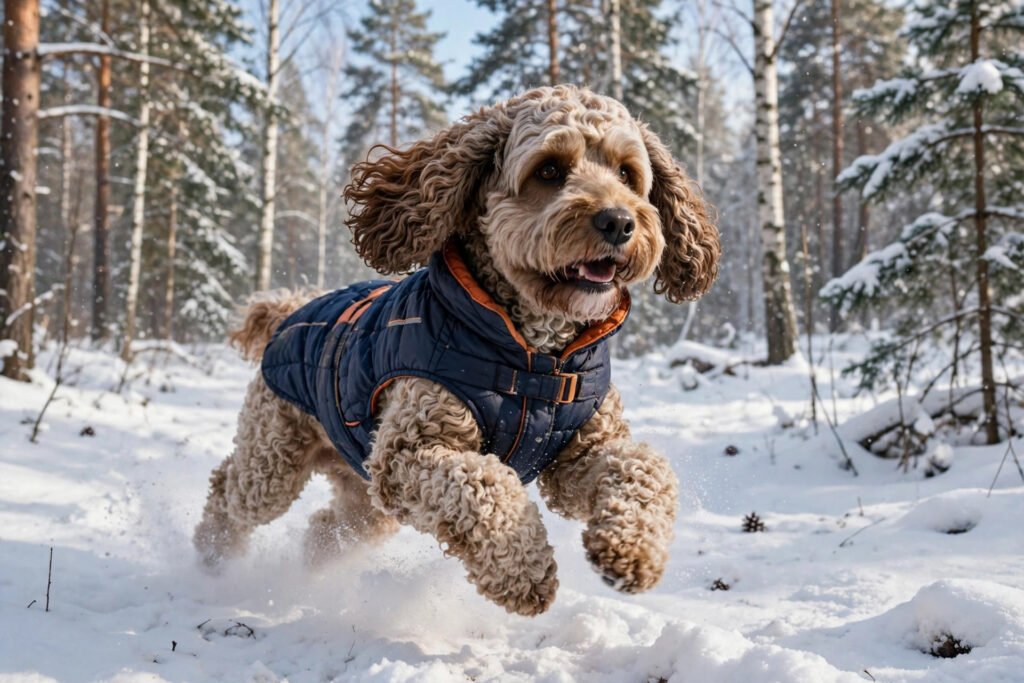
– Fit first: measure chest girth (behind the front legs) and back length (neck to tail base); use the brand’s size chart, not the weight guess. The coat should cover to the tail base with a belly strap between the front legs — no gaping, no dragging.
– Waterproof or water-resistant shell for wet climates; fleece lining for dry cold
– Reflective strips for dark winter evenings
– Easy on/off — if it’s a wrestling match, you won’t use it
Sweaters work for dry cold; for wet snow you want a proper waterproof coat. One of each covers a real winter.
 CockapooDaily
Paw Care: The Winter Routine
Paws take the worst of winter — ice, salt, and frozen ground:
Ice balls: snow packs between the toes into painful ice lumps, especially on untrimmed paw fur. Prevention: trim the fur between the pads short before winter (rounded-tip scissors, careful). After walks, check and melt any buildup with a warm (not hot) towel.
Road salt and de-icer: chemical burns on pads, toxic if licked off in quantity. This is the #1 winter paw issue in cities.
Boots vs balm:
– Boots = best protection (salt, ice, extreme cold). Introduce gradually indoors with treats — most dogs walk funny for the first three wearings, then forget them.
– Paw balm = good barrier for mild conditions and dogs that won’t tolerate boots. Apply before walks; it doesn’t replace boots in deep cold or heavy salt.
Post-walk paw routine (60 seconds): rinse or wipe paws with lukewarm water → dry thoroughly, especially between toes → check for salt residue, cracks, or ice → thin layer of paw balm if pads look dry. Every winter walk, no exceptions. (Chronic winter paw-chewing? See why does my cockapoo lick its paws so much.)
Post-Walk De-Icing Routine
For snow days, add this after the paw routine:
1. Towel off the legs, belly, and beard — where snow clumps form
2. Low dryer on warm (not hot) for any packed snow; never pull clumps — melt them
3. Brush out before mats set — wet, packed coat felts fast
4. Check the ears — damp flaps after snow play need drying (see cockapoo ear infections)
Prevention tip: a light spray of coconut oil on legs and belly before walks reduces snow sticking. Wipe off excess afterward.
⚠️ The Wet-Plus-Wind Warning
The most useful insight in this article: 40°F rain with wind chills a cockapoo faster than 25°F dry snow. Dry cold is manageable — the coat still insulates. Wet cold destroys insulation and wind strips the remaining warmth. Owners who’d never worry at 25°F will take the dog out in 42°F drizzle without a coat — and that’s the walk that ends in violent shivering. Rule: rain below 50°F = coat on, walk shortened. Always.
Indoor Winter: The Forgotten Half
- Night cold: most indoor dogs self-regulate, but seniors and toys appreciate an extra blanket on the bed — and keep beds off drafty floors (raised beds help).
- Dry air: forced-air heating dries skin, cracks paw pads, and creates static coat. Signs: flaking, itchiness with no other cause. A humidifier in the dog’s main room helps more than any lotion.
- Hydration: dogs drink less in winter and owners forget to offer. Keep water fresh and available — dehydration worsens dry skin.
- Heat sources: monitor around space heaters, radiators, and fireplaces — cockapoos love heat and will park too close. Burns happen.
Winter Exercise Adjustments
“Shorten walks” is where every page stops. Here’s the rest:
- Shorter bursts, more often: two 15-minute walks beat one 30-minute freeze.
- Move it indoors: snuffle mats, puzzle feeders, hide-and-seek, hallway fetch, trick-training sessions — 15 minutes of nose work tires more than 30 of walking (see how much exercise does a cockapoo need).
- Midday walks in winter — warmest part of the day, most light.
- Watch the paws, not the clock: paw-lifting means the walk is over, whatever the plan said.
Car Safety in Winter
Never leave a cockapoo alone in a cold car — it loses heat shockingly fast once the engine’s off, and a small dog chills in minutes. For errands: dog stays home, or one human stays with the dog with the heat running. No exceptions, no “just five minutes.”
Also: winter water is dangerous. Icy ponds and cold lakes drastically drop body temperature — keep cockapoos away from open water in winter no matter how much they love swimming in summer.
Hypothermia & Frostbite: Emergency Box
Hypothermia (body temp below 99°F; normal is 101–102.5°F): violent shivering giving way to lethargy, muscle stiffness, weakness, mental dullness. Act: get inside, warm blankets, warm (not hot) water bottles wrapped in towels against the body — never direct heat. Then vet, urgently — severe hypothermia needs IV fluids and monitoring.
Frostbite (ears, paws, tail tip — the extremities): pale, gray, or blue skin; pain then numbness; blistering or blackened tissue in severe cases. Act: warm the area gradually — lukewarm water around 104°F, never hot, never rub the skin. Then vet, same day — tissue damage assessment can’t wait.
Both are rare in cared-for pet cockapoos and both are emergencies when they happen. Knowing the signs is the whole game.
Frequently Asked Questions
What temperature is too cold for a cockapoo? Most Cockapoos are comfortable down to about 45°F (7°C). Below that, shorten outdoor time and watch for shivering, lifting paws, or tucking the tail. Below freezing, keep outings to potty breaks and short walks — and puppies, seniors, and clipped dogs feel the cold sooner than a healthy adult with a full coat.
Does my cockapoo need a coat in winter? Not every Cockapoo needs one, but most benefit below about 35°F (2°C) — especially puppies, seniors, and dogs with a fresh short clip, because a clipped coat has lost its insulation. A coat also stops snow and ice balling up in the fur on the belly and legs.
How do I know if my cockapoo’s winter coat fits? Two fingers should fit flat between the coat and the dog’s chest, the coat should cover from the neck to the base of the tail without pulling when the dog walks, and the leg straps should not rub the armpits. If the coat rides up, gaps at the chest, or the dog freezes mid-walk, the fit is wrong — a coat that rubs causes matting under the straps.
Can cockapoos sleep outside in winter? No — never leave a Cockapoo outside overnight in cold weather. They are indoor companion dogs with no undercoat to speak of, and an overnight drop in temperature can bring on hypothermia before anyone notices. They sleep indoors, in a warm bed, in every season.
What temperature is too cold for a cockapoo?
Below 45°F, add a coat. Below 32°F, add paw protection and shorten outings. Below 20°F, potty trips only. Puppies, seniors, and clipped dogs need protection sooner at every level.
Should cockapoos wear coats in winter?
Below ~45°F, yes — it’s insulation, not fashion. Below freezing, strongly recommended. Fit matters more than brand: cover to the tail base, belly strap, no gaping.
Are cockapoos good in the snow?
They enjoy it in moderation — short play sessions are fine with a coat and paw protection. Deep snow exhausts small dogs fast, and snowballs in the coat are painful. Supervise, keep it brief, de-ice after.
Do cockapoos need boots in winter?
In salted or icy areas, boots are the best paw protection available. For milder winters, paw balm + the post-walk routine suffices. Introduce boots gradually with treats.
Can my cockapoo sleep outside in winter?
No — never. Cockapoos are indoor dogs; overnight cold exposure risks hypothermia even in moderate winter. Indoors, with a warm bed, always.
Can cockapoos get cold at night indoors?
In a normal heated home, no. In drafty houses or for seniors and toys, add a blanket and keep the bed off cold floors.
The Bottom Line
Yes, they get cold — no undercoat, small body, wet fur. But winter with a cockapoo isn’t a siege; it’s a system: the temperature tiers, a coat that fits, the 60-second paw routine, shorter smarter walks, and respect for the wet-plus-wind combo. Do that, and your cockapoo gets a winter of snow-zoomies instead of shivering — which, frankly, is the whole point of the season.

Leave a Reply