
Why does your cockapoo get tear stains and how do you remove them? Causes, a daily cleaning routine, myth-busting, US product tips and vet-visit triggers.
Quick answer: Cockapoo tear stains are reddish-brown marks caused by porphyrins — iron-containing molecules in tears that turn rust-coloured on contact with air. They’re usually cosmetic, not dangerous. The fix is a simple daily routine: wipe the eye area morning and evening with a damp cotton pad (or pre-soaked wipes), keep the facial hair trimmed, and switch to filtered water if your tap water is mineral-heavy. See a vet if discharge turns yellow-green, the eye swells, or only one eye is affected.
If your cockapoo has rust-coloured streaks running from the inner eyes, you’re dealing with tear stains — one of the most common cosmetic complaints in the breed, especially on lighter-coloured dogs. The good news: in most cases they’re harmless and manageable at home. This guide covers what causes them, the daily routine that actually clears them, which popular “remedies” are myths, and when stains are a sign to see the vet.
Note: this article is for information only and isn’t a substitute for veterinary advice. Eye issues can escalate, so when in doubt, call your vet.
What Exactly Are Tear Stains?
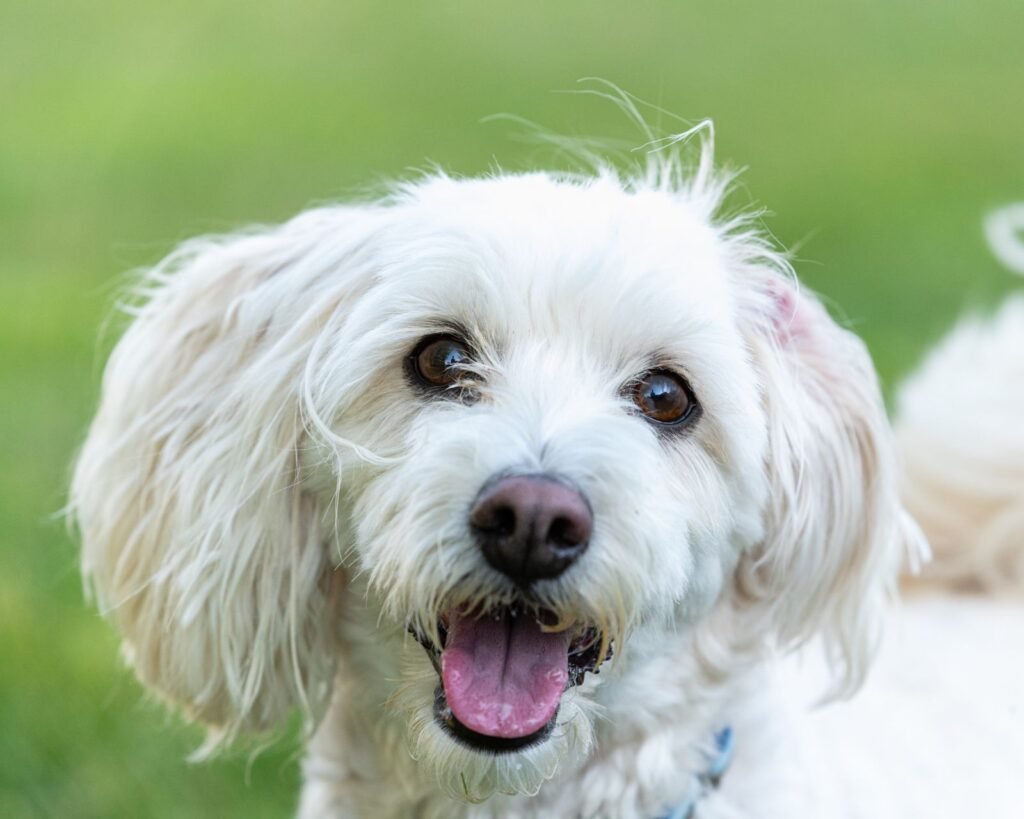
Tear stains are reddish-brown discoloration of the fur beneath and around the eyes. They’re caused by porphyrins — iron-containing molecules naturally present in tears (also in saliva and urine). When tears sit on the fur and meet the air, porphyrins oxidise and turn a rusty red-brown — the same chemistry that browns a cut apple.
All dogs produce porphyrins, but cockapoos show stains more because:
– Their eyes are relatively large and prominent, producing more tears.
– Many have narrow or partially blocked tear ducts, so tears spill onto the fur instead of draining away.
– Light coats (white, apricot, cream) show every mark; dark coats hide them.
Stains themselves aren’t an illness — they’re a plumbing and chemistry issue. But a sudden change in staining (new stains, one eye only, colour change) can signal something worth investigating.
Why Does My Cockapoo Get Tear Stains?
There’s always a reason tears are overflowing. The common causes, roughly in order of likelihood:
Tear drainage issues. Narrow, tiny or partially blocked tear ducts (sometimes called micropuncta) are common in poodle-type breeds. Tears can’t drain into the nose normally, so they spill over the eyelid edge.
Allergies. Airborne irritants — dust, pollen, cigarette smoke, aerosols, scented candles, even strong perfume — make eyes water. Food sensitivities can contribute too, though the link is weaker than many blogs claim (see myths below).
Physical irritation. Hair growing into the eyes is the classic cockapoo cause — facial furnishings that aren’t trimmed regularly wick tears down the face. Grit, dust and wind do the same, which is why stains often worsen in winter.
Eyelid problems. Inward-turned eyelids (entropion) or eyelashes rubbing the cornea cause chronic watering. Your vet can spot this in seconds.
Ear infections. Odd but true — an infection on one side often causes tearing on the same side, because the ear and tear drainage share anatomy. If staining is one-sided, check the ear on that side.
Water and diet. Mineral-heavy tap water is a suspected contributor — there’s a neat diagnostic trick for this below. Diet matters less than the internet suggests, but a poor-quality diet won’t help overall eye health.
 CockapooDaily
The Daily Routine That Actually Works
Scattered tips don’t clear stains; a routine does. This takes about two minutes a day:
Morning (60 seconds):
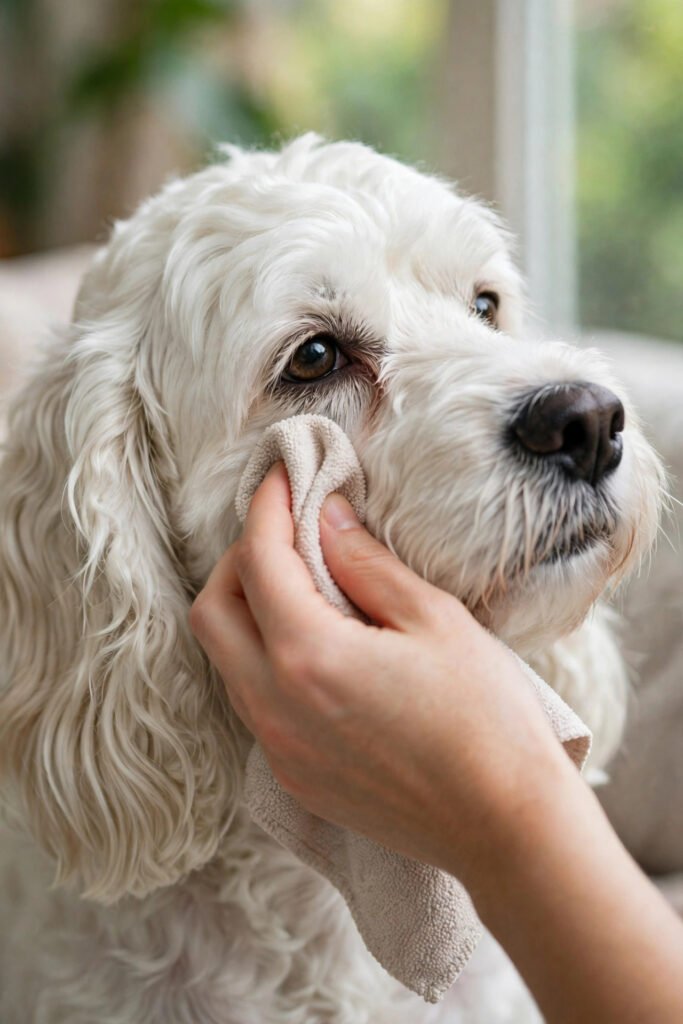
1. Dampen a cotton wool pad with cooled boiled water (or use a pre-soaked tear-stain wipe).
2. Wipe gently outward from the inner corner of each eye — one fresh pad per eye so you don’t transfer anything between them.
3. Pat dry with a soft dry cloth. Moisture left sitting in the fur feeds the reddish yeast (Ptyrosporin) that deepens stains.
Evening (60 seconds):
Repeat the morning wipe. If your cockapoo’s eyes water a lot during the day, add a midday wipe too — frequency beats intensity here.
Weekly (5 minutes):
– Trim the facial hair around the eyes with rounded-tip scissors (or ask your groomer to do it). Hair touching the eyeball is the single biggest preventable cause.
– Check for redness, swelling or odour while you’re there.
– In cold, windy weather, a thin smear of coconut oil or Vaseline on the fur below the eyes acts as a waterproof barrier — tears run off instead of soaking in.
The water-bowl test: if your cockapoo also has brown staining around the mouth, suspect mineral-heavy tap water. Switch to filtered water for two to three weeks and watch both areas. Many owners see improvement — it’s one of the cheapest experiments in dog care.
Most owners see visible fading within 2–4 weeks of consistent routine. Old, set-in stains on the fur won’t wash out — you’re waiting for unstained fur to grow through, which is why consistency matters more than any single product.
What Works vs What’s a Myth
| Claim | Verdict |
|---|---|
| Daily wiping with damp cotton pads | ✅ Works — the foundation of everything |
| Trimming facial hair | ✅ Works — removes the main wicking cause |
| Filtered/distilled water | ✅ Worth trying — helps many dogs, harmless |
| Pre-soaked tear-stain wipes | ✅ Works — convenient version of the damp pad |
| Coconut oil / Vaseline barrier | ✅ Helps — keeps tears off the fur |
| “Hypoallergenic diet cures tear stains” | ❌ Myth — no solid evidence; diet is rarely the main driver |
| Whitening wipes / bleaching products | ❌ Avoid — many contain harsh bleach-like chemicals near the eyes |
| Angel Eyes / Tylan (antibiotic) for stains | ❌ Avoid without vet direction — casual antibiotic use risks resistance; vets strongly discourage it |
| Boric acid / contact lens cleaner on eyes | ⚠️ Caution — sometimes suggested online, but eyes are delicate; stick to water or purpose-made wipes unless your vet says otherwise |
| Diluted hydrogen peroxide near eyes | ❌ Avoid — too risky for home use around eyes |
 CockapooDaily
Teary Eyes vs Eye Infection: How to Tell
Normal weepy eyes and an infected eye can look similar at first glance. This table is the difference that matters:
| Normal tear staining | Possible eye infection | |
|---|---|---|
| Discharge colour | Clear or rusty-brown | Yellow, green, or thick and tacky |
| Eyes affected | Usually both | Often one eye |
| Behavior | Normal — no pawing or squinting | Pawing at the eye, squinting, blinking a lot |
| Surrounding skin | Stained fur, skin underneath looks normal | Redness, swelling, or heat around the eye |
| Smell | None or mild | Noticeable odour |
| Onset | Gradual, ongoing | Sudden or rapidly worsening |
If it looks like the right-hand column, skip the home routine and call your vet — eye infections can worsen quickly.
Discharge Colour Guide (Traffic Light)
- 🟢 Clear or rusty-brown, both eyes, dog comfortable — normal tear staining. Home routine.
- 🟡 Thicker than usual, slight redness, mild squinting — monitor for 24 hours while keeping the area clean. If it doesn’t improve, call the vet.
- 🔴 Yellow or green discharge, swelling, pawing, one eye only, sudden worsening, or any odour — vet visit. Don’t wait.
When to See the Vet: The Checklist
Book a vet appointment if you notice any of these:
– Discharge turns yellow or green, or becomes thick and sticky
– One eye suddenly worse than the other
– Swelling, redness, or heat around the eye
– Your dog paws at the eye or squints persistently
– Staining appears suddenly in an adult dog that never had it
– You suspect inward-turned eyelids or constant irritation
What the vet may do: a fluorescein dye test (orange dye that reveals duct blockages and corneal scratches under blue light), tear-duct flushing under sedation for blockages, or discuss minor surgery for entropion. Most tear-stain cases never need any of this — but it’s reassuring to know the options exist.
Puppies and Tear Stains
Staining often appears in the first few months, when tear ducts are still developing and puppy fur is fine and pale. Many puppies partially grow out of it as their facial structure matures and ducts open up — but don’t just wait. Start the gentle wiping routine early (it’s also excellent handling practice for grooming later), keep the face trimmed, and mention persistent staining at your puppy’s vet checks. What you shouldn’t do is reach for whitening products or antibiotics for a puppy — the routine and time do the work.
US-Specific Tips
- Products: Pre-soaked tear-stain wipes and gentle eye cleansers are widely available on Amazon, at Chewy, PetSmart and Petco. Look for fragrance-free, purpose-made eye wipes — not general “pet wipes” and definitely not human face wipes.
- Winter: Cold wind plus indoor heating is peak tear-stain season across much of the US. The Vaseline/coconut oil barrier trick in the routine above earns its keep from November to February.
- Tap water: Many US regions have notably hard water. If the water-bowl test points that way, a basic jug filter is enough — no need for anything fancy.
- Groomers: Ask for the face trim to be included in every groom — many owners don’t realize it’s often skipped unless requested. (Related: how often should you bathe a cockapoo.)
Frequently Asked Questions
Do cockapoos get tear stains?
Yes — they’re one of the breeds most prone to them, thanks to prominent eyes, poodle-type tear ducts and (often) light coats. It’s cosmetic in the vast majority of cases.
Why are my cockapoo’s tears pink or red?
That’s the porphyrins oxidising — iron molecules in normal tears turning rust-coloured on the fur. Pink/red staining is the classic sign, not blood.
Can diet cause tear stains?
Rarely the main cause, despite what some blogs claim. Allergies can increase watering, but switching foods alone seldom fixes staining. Focus on the cleaning routine and facial hair first.
Are tear stains harmful or just cosmetic?
Almost always just cosmetic. They become a health matter only when accompanied by infection signs (see the traffic-light guide above).
Do cockapoos grow out of tear stains?
Many puppies improve as their tear ducts mature, but adult dogs with narrow ducts usually need the ongoing routine. It’s maintenance, not a one-time cure.
Are tear stain removers safe?
Purpose-made, fragrance-free eye wipes are fine. Avoid anything marketed as “whitening” with bleach-like ingredients, and avoid antibiotic products unless your vet specifically prescribes them.
The Bottom Line
Tear stains look alarming but are usually just chemistry: wipe daily with a damp pad, keep the face trimmed, try filtered water, and give it a few consistent weeks. Know the traffic-light signs so you can tell cosmetic staining from a vet visit — and leave the myths (whitening wipes, casual antibiotics) on the shelf.
Next: Tear stains often go hand-in-hand with overall grooming — see how often you should bathe your cockapoo to complete the routine.
How do I remove tear stains from my cockapoo’s face? Wipe the fur below the eyes once a day with a soft damp cloth or a vet-approved eye wipe, and keep the hair around the eyes trimmed short so it does not wick tears onto the face. There is no miracle remover: whitening wipes only manage the staining, and antibiotics such as tylosin should never be used for staining alone — the colour comes from porphyrins in the tears, not infection.
Can cockapoo tear stains be prevented? Not entirely, but daily cleaning, trimming the face hair, and removing irritants (air fresheners, hairspray, dust, long hair rubbing the eye) keep staining to a minimum. If staining suddenly gets worse, look for the cause — allergy, blocked duct, eye irritation or an ear infection on the same side — rather than just cleaning more.
Why does my cockapoo have tear stains under one eye only? One-sided staining usually means the problem is on that side: a narrower or blocked tear duct, irritation in that eye, or an ear infection on the same side (the ear and tear drainage share anatomy). If only one eye is affected, or the discharge turns yellow-green, book a vet check.
When should I take my cockapoo to the vet for tear stains? Book a vet visit if staining appears suddenly in an adult dog, affects only one eye, or comes with redness, swelling, squinting, pawing at the eye, or yellow-green discharge. Staining alone in a puppy with clear, watery tears is usually cosmetic, but a vet should still check it at the first visit.

Leave a Reply