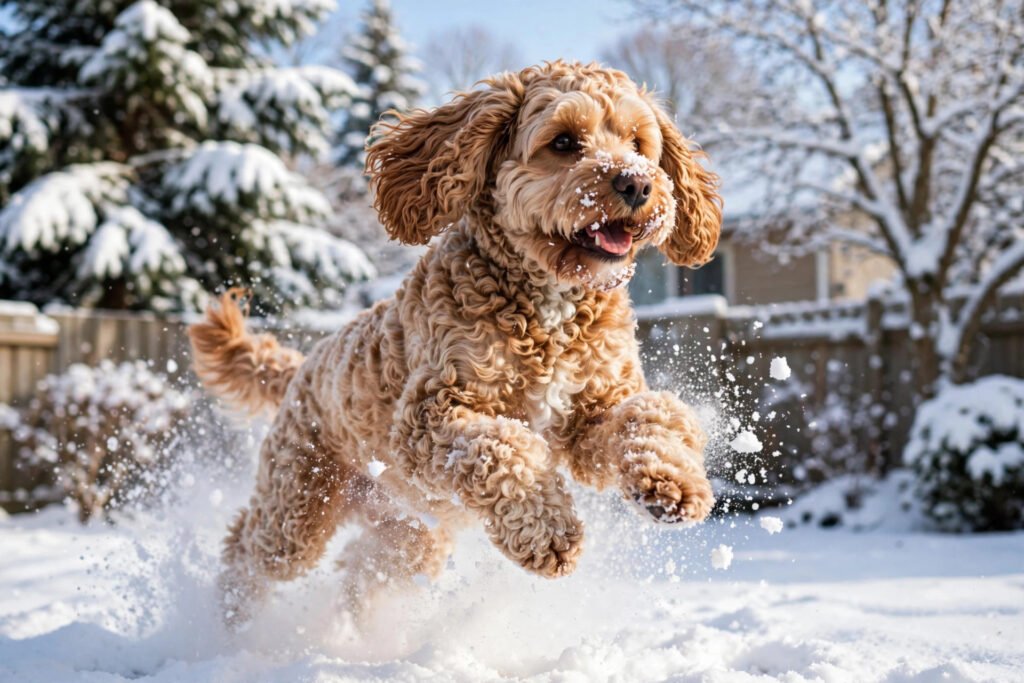
Do Cockapoos like snow? Most love it — but curly fur traps snowballs and small paws chill fast. Learn safe play time, first-snow tips, and snowball removal.
Quick answer: Most Cockapoos love snow — many get the zoomies the moment flakes fall. But their curly fur traps snow into balls on legs, belly and paws, and their small paws chill fast. Keep first snow sessions to about 15 to 30 minutes, watch for shivering or lifted paws, and melt snowballs out with lukewarm water when you get home.
The first snowfall of the year does something to most Cockapoos. The back door opens, flakes are falling, and your dog charges out, leaps into a drift, and comes up with snow on its nose and joy on its face.
That enthusiasm is real, but snow is not a free-for-all for this breed. A Cockapoo’s curly coat is a snow magnet: wet snow packs between the toes, melts against the warm paw, and refreezes into ice balls. Small paws chill fast too. This guide covers the first snow, safe play time, frozen paws, and snowballs.
Do Cockapoos Like Snow?
Most do. Cockapoos are playful, people-focused dogs, and snow is the most exciting thing that can fall out of the sky: it moves, it can be chased, it can be eaten, and it makes everything smell different. Owners report snow zoomies, face-first dives into drifts, and dogs that refuse to come back inside.
But not every Cockapoo is a snow dog, and that is normal. Some dislike snow, especially in a blizzard — wind, deep powder they sink into, and paws that sting on frozen ground. Smaller Cockapoos have shorter legs, so deep snow is hard work. The right question is not “do Cockapoos like snow?” but “does MY Cockapoo like THIS snow, today?”
Why Snow Is Tricky for a Cockapoo’s Coat
The problem is the coat. Cockapoos have soft, wavy or curly hair that keeps growing, including between the pads and down the legs and belly. That hair acts like Velcro for snow: the paw is warmer than the snow, so a thin layer melts, refreezes around the hairs into ice, and grabs more snow with every step. The Cockapoo Owners Club UK puts it exactly: snow and ice cling to the ears, belly, legs and feet, and “you are not walking a Cockapoo but a snowman.”
Wet snow is the worst offender. Dry, powdery snow at well below freezing mostly brushes off, but wet, packing snow near freezing clumps and sticks — one specialist source puts the sticky band at roughly 28 to 34°F, as its own rule of thumb rather than an official threshold. A wet, ice-packed coat also loses its insulation: a Cockapoo has no thick double coat like a Husky. For how cold is too cold in general, see our guide on whether Cockapoos get cold in winter.
First Snow: How to Introduce Your Cockapoo to Snow
A puppy’s first snow deserves a slow start. Some charge straight in; others freeze at the door, unsure what the white stuff is. Pushing a frightened puppy into deep snow makes the next snowfall harder, not easier.
Pick a light snow day, not a storm. A gentle dusting or a few inches of powder is the right first experience. Skip it if it is a blizzard, deep drifts, or wet heavy snow.
Start in your own yard. Let your Cockapoo step onto the snow on its own. Stand with it, talk calmly, and toss a favorite toy a few feet out so the dog chooses to go in after it.
Keep the first session to 10 minutes. Short and happy beats long and overwhelming. Play, praise, and go back inside while the dog still wants more, then build up over the next few snow days.
Do not force it. If your Cockapoo plants its feet and will not go out, do not drag it. Let it watch from the doorway and try again later, or accept a quick potty break and indoor play on snow days.
How Long Can a Cockapoo Play in the Snow?
There is no official, Cockapoo-specific time limit — no vet body publishes one. Cockapoos sit on the cautious end of general vet guidance: small (12 to 25 pounds), single-coated, with furry toes that collect ice.
The numbers, honestly stated. Dial A Vet’s vet team gives a general guideline of about 20 to 30 minutes of snow play for most healthy dogs, shorter for small or short-coated dogs. Wellness Pet Food suggests about 30 minutes, LifeMyDog puts small breeds at 15 to 30 minutes, and one UK vet team advises 15 to 20 minutes in harsh cold, calling anything under -4°C (25°F) dangerous for every dog. These are rules of thumb, not a tested Cockapoo limit.
A sensible starting range for a healthy adult Cockapoo is 15 to 30 minutes of active snow play — shorter in wet snow near freezing, shorter still below about 25°F, and much shorter for puppies, seniors, and dogs with health problems. Active play keeps a dog warmer than standing around, so halve the time if your dog is mostly standing still.
The watch-for signs are the real limit. Come inside at the first sign of shivering, lifting paws, slowing down, whining, seeking shelter, or chewing at the feet — whatever the clock says. If your Cockapoo shows any of these, the session is over.
Frozen Paws: Signs and What to Do
Paws are the first place cold shows up: direct contact with snow and ice, little insulation once snow packs in, and the first place frostbite starts.
Signs a paw is too cold: lifting a paw off the ground, shifting weight from foot to foot, prancing in place, stopping to chew at the feet, limping that eases once indoors, and pads that look pale, gray, or bluish and feel cold and hard.
What to do: If your Cockapoo starts lifting paws or chewing its feet, head home right away. Pick the dog up and carry it over the coldest stretch if you can. Once inside, warm the paws slowly with lukewarm water or by holding each foot in your warm hands. Never use hot water, a heating pad, or a hair dryer.
When to call the vet: Pads that stay pale, gray, or bluish after warming, pads cracked and bleeding, swelling or discharge between the toes, limping over a day, or vomiting, diarrhea, or lethargy after a walk. Suspected frostbite is a same-day vet call.
Boots help here too: our guide to Cockapoo winter boots and paw protection covers which boots fit a Cockapoo and how to get a boot-hating dog used to them.
Snowballs in Fur: Prevention
Removing snowballs is a chore; stopping them forming is the win. Do these before the walk, not after.
Trim the fur between the pads. This is the single most effective step. Keep the hair between the pads trimmed level with the pad surface, using small clippers or blunt-tipped scissors — Cornell’s vet school and the AVMA both recommend it. There is then nothing sticking out for snow to pack against. Ask your groomer to do a pad trim before winter if you are not confident. See our best brush for a Cockapoo guide for grooming tools.
Apply paw wax or balm before the walk. A thin layer on the pads and between the toes creates a slippery barrier so snow slides off instead of sticking, and it protects against salt. Reapply on long walks. A light oil spray on legs and belly helps too — but keep it light, or the dog ends up greasy.
Brush before you go out. A well-brushed, tangle-free coat collects less snow than a matted one — brush legs, belly and ears before a snow walk.
Use boots on sticky days, and a waterproof coat for the belly. On wet-snow days near freezing, boots are the only fix that stops ice balls on the feet completely, and they keep salt off the paws. A jacket over chest and belly stops snow packing onto the underside.
Snowballs in Fur: Safe Removal
Even with prevention, a Cockapoo that loves snow will come home with some. Removing them the wrong way hurts — frozen balls have hair frozen through them, and pulling them off takes hair and sometimes skin with it.
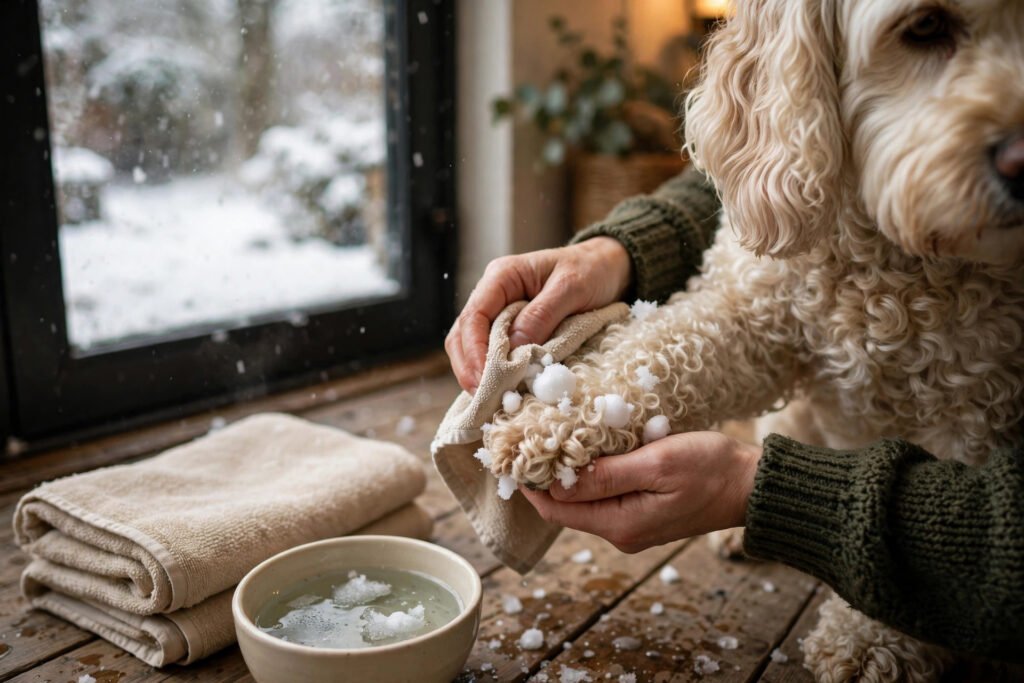
Melt them with lukewarm water. Stand the affected foot in a shallow bowl of lukewarm water, or hold a warm damp cloth against the clump, until it loosens and slides off. For legs and belly, a lukewarm bath or warm damp towel works the same way. Never use hot water — it shocks the skin and can burn cold paws.
Use a kitchen whisk. A plain metal kitchen whisk, run gently over the fur, breaks snowballs apart and drops them out without pulling. Use it lightly on the legs and paws, and stop if the dog flinches.
Never pull or yank them out. This is the one rule every source agrees on. Pulling a frozen clump tears hair and skin and teaches the dog that snow removal hurts.
Dry thoroughly afterward, including between the toes. Wet fur between the toes is where the next ice ball starts. Pat dry and check the pads for cuts or salt crystals. If your Cockapoo keeps licking its paws after a snow walk, something is still irritating them — see our guide on why Cockapoos lick their paws so much.
 CockapooDaily
After Snow Play: The 2-Minute Warm-Up Routine
Do this after every snow outing, before the dog settles on the sofa. It takes two minutes and prevents most snow-related problems.
- Rinse the paws. Dunk each paw in lukewarm water or wipe with a damp cloth to remove salt and grit. Salt left on paws gets licked off and swallowed.
- Melt out any remaining snowballs. Warm water or warm hands — never pull.
- Dry thoroughly, including between the toes. Check for grit or salt crystals hiding in the fur.
- Check the pads. Look for cracks, redness, swelling, or cuts — catching one early means a few days of balm.
- Apply balm to dry pads. A thin layer of paw wax moisturizes pads dried by cold and salt.
- Towel-dry the belly, legs and ears. A quick towel rub stops the coat staying wet and cold.
- Warm room, fresh water, and rest. Let your Cockapoo warm up indoors and drink.
Snow Safety: What to Avoid
Road salt and ice melt. The biggest hidden danger. Rock salt dries and cracks pads; chemical de-icers can burn them. Dogs lick their paws clean at home, swallowing residue that can cause vomiting, diarrhea and lethargy. Keep your Cockapoo off freshly salted sidewalks, and rinse paws after every walk.
Frozen ponds and lakes. Never let your Cockapoo walk on ice over water. Thin ice breaks — a small dog in freezing water is an emergency. Keep the dog on a lead near any frozen water.
Deep snow and hidden objects. A Cockapoo’s legs are short. In snow deeper than its chest, every step is a struggle, the belly packs with snow, and the dog tires and chills fast. Fences, sticks and holes also hide under fresh snow. Stick to paths and open ground you know.
Eating snow. A few mouthfuls are harmless fun, but a dog that eats a lot of snow can get an upset stomach, and roadside snow carries salt, grit and chemicals. Discourage it, and offer fresh water at home afterward.
Antifreeze. Winter brings antifreeze puddles on driveways. It tastes sweet to dogs and is deadly in tiny amounts. Keep your Cockapoo away from any colored puddle, and call your vet at once if you think it drank any.
Blizzards and whiteouts. A Cockapoo is not a Husky. In a blizzard — high wind, driving snow, near-zero visibility — keep the outing to a quick potty break. Stay in and play indoors instead.
When to Call the Vet
Most snow-play problems are mild. Call your vet for pads that stay pale or bluish after warming, pads cracked and bleeding, sores that do not heal in a few days, swelling or discharge, limping over a day, or vomiting, diarrhea, or lethargy after a walk. Call at once if your Cockapoo may have drunk antifreeze or eaten a large amount of road salt or ice melt. And if your dog shivers long after coming inside, seems lethargic, or feels cold hours later, that is a vet call too: it can be hypothermia, not just a cold dog.
Frequently asked questions
Do Cockapoos like snow?
Most do — many get the zoomies the moment flakes fall. But not every Cockapoo likes it: some dislike deep snow, blizzards, or wet heavy snow, and puppies can be frightened by their first snowfall.
How long can my Cockapoo play in the snow?
For a healthy adult, 15 to 30 minutes of active play is a sensible starting range — shorter in wet snow near freezing or below about 25°F, and much shorter for puppies and seniors. There is no official Cockapoo-specific limit, so the watch-for signs are the real limit: shivering, lifting paws, slowing down, whining, or heading for the door mean the session is over.
How do I stop snowballs forming in my Cockapoo’s fur?
Trim the fur between the pads level with the pads before winter, apply paw wax or balm before every walk, and use boots on wet-snow days. Wet snow near freezing (roughly 28–34°F) clumps worst.
How do I get snowballs out of my Cockapoo’s fur?
Melt them, never pull them. Stand the paw in lukewarm water, hold a warm damp cloth against the clump, or warm the foot in your hands until it loosens. A kitchen whisk run gently over the fur breaks them apart without pulling. Never use hot water, and never yank a frozen clump out.
Can my Cockapoo get frostbite from playing in the snow?
Yes, though it is uncommon in a normal play session. Paws, ears and tail tips are the vulnerable spots — watch for pads that look pale, gray, or bluish and feel cold and hard. Keep sessions short in deep cold, use boots or wax, and call your vet the same day if you suspect frostbite.
Conclusion
Most Cockapoos love snow, and there is no reason to keep a snow-loving dog inside all winter. The breed’s problem is not the cold itself — it is the coat. Curly fur traps snow into ice balls, and small paws chill fast on frozen ground. Keep play to about 15 to 30 minutes, watch for shivering, lifted paws and slowing down, and let the dog tell you when it has had enough. Prevent snowballs with a pad trim and paw wax before the walk, melt out whatever still forms with lukewarm water, and run the two-minute rinse-and-dry routine when you get home.
Leave a Reply