
Is your Cockapoo shaking, shivering or trembling? Learn the 10 causes — from cold and excitement to seizures and Addison’s — and when to call the vet.
Quick answer: Most Cockapoo shaking is harmless: cold, excitement, or fear — especially fireworks — makes a small, sensitive dog tremble, and it stops once the trigger passes. Shaking with vomiting, diarrhea, weakness, collapse, or no clear trigger needs a vet visit. A seizure, suspected poisoning, or shaking that will not stop is an emergency: call your vet now.
A shaking Cockapoo is hard to watch — one minute your dog is fine, the next its whole body is trembling, and you have no idea whether it is cold, scared, or seriously ill.
Shaking is a symptom, not a diagnosis. Cockapoos shake for many reasons, from the completely normal (a cold morning, the excitement of your arrival home) to the genuinely urgent (a seizure, poisoning, or a blood-sugar crash). The cause is usually written in the details: when it happens, what the rest of the body is doing, and what else has changed. This guide works through the causes one by one so you can match what you see to the most likely reason.
The Shake Decoder: Match What You See to the Cause
Find your Cockapoo’s row, then read the matching section below.
| Cause | What the shaking looks like | What else to look for | What to do |
|---|---|---|---|
| Cold | Whole-body shiver outdoors or after a bath | Cold ears and paws, curled-up posture | Warm up, dry off, add a coat |
| Excitement | Fine trembling at greetings, mealtimes, or walks | Wiggly, wagging tail, happy and alert | Nothing — it stops on its own |
| Fear or anxiety | Trembling during fireworks, thunder, or at the vet | Hiding, panting, tucked tail, flattened ears | Calm reassurance, a safe den |
| Pain | Shaking at rest, reluctance to move | Yelping, limping, guarding one spot | Vet visit — never human painkillers |
| Nausea | Shivering with lip-smacking or drooling | Vomiting, refusing food, restlessness | Withhold food briefly; vet if it keeps up |
| Old age | Leg tremors, often hind legs, when standing | Stiffness, slower on stairs, muscle loss | Vet check for arthritis |
| Low blood sugar | Weakness and trembling, often in puppies | Wobbliness, lethargy, disorientation, collapse | Honey on the gums, call the vet at once |
| Seizure | Violent jerking, rigid or paddling legs, unaware | Falling over, drooling, loss of bladder control | Keep hands clear, time it, vet now |
| Addison’s disease | Episodes of shaking with vomiting, diarrhea, or weakness | Poor appetite, weight loss, repeated “off” days | Vet blood tests — treatable once diagnosed |
| Poisoning | Tremors after eating something unknown | Vomiting, drooling, diarrhea, wobbliness, collapse | Vet or poison control immediately |
 CockapooDaily
Cold: The Most Common Cause
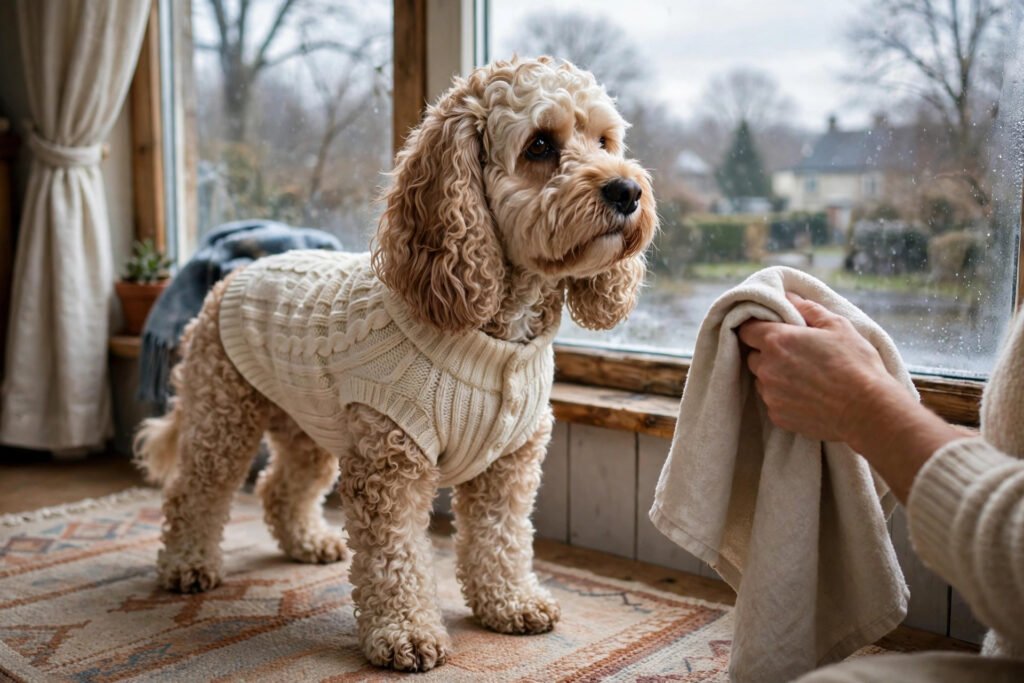
Cockapoos are small dogs with a light build, and they feel the cold more than bigger breeds. Shivering is the body’s way of generating heat — muscles contract and relax in rapid succession to warm the dog up. A Cockapoo that shakes on a cold walk, after a bath, or in a drafty room is usually just cold.
Watch for the pattern: the shaking starts outdoors or after getting wet, the ears and paws feel cold, and the dog curls up or seeks warmth. Dry your Cockapoo thoroughly after baths and wet walks, and use a dog coat in winter — our guide to whether Cockapoos get cold in winter covers coats and cold-weather signs in detail. If the shaking stops within a few minutes of warming up, cold was the cause. If it keeps going in a warm room, look further down this list.
Excitement: Shaking With Joy
Some Cockapoos shake because they are happy. A fine tremble when you come home, when the leash comes out, or when dinner is being prepared is an overflow of emotion, not a health problem. The dog is alert, wiggly, tail wagging, and otherwise completely normal — and the shaking stops as soon as the excitement fades. It is one of the most common causes in young Cockapoos, and it usually lessens as the dog matures.
Fear and Anxiety: Fireworks, Thunder, and the Vet
Cockapoos are sensitive dogs, and fear is one of the biggest shaking triggers. Fireworks, thunder, a vet trip, or a new visitor can all set off trembling that lasts minutes or even hours. The shaking usually comes with other stress signs: hiding, panting, a tucked tail, flattened ears, or clinging to you.Comfort your dog calmly and give it a safe, quiet place — a covered crate or an interior room — away from the noise. Do not punish the shaking; fear is not misbehavior. For repeated noise fear, our guide to Cockapoos scared of fireworks and thunder covers desensitization, calming routines, and when to ask your vet about medication. If the fear is getting worse, or your Cockapoo is anxious without an obvious trigger, talk to your vet — chronic anxiety is treatable.
Pain: Shaking While Resting
A dog in pain often shakes, and this is the cause owners most often miss. Unlike cold or fear, pain shaking tends to happen at rest — your Cockapoo trembles while lying down, is reluctant to move or jump, guards one part of its body, or yelps when touched. Back pain, joint pain, a sore leg, or abdominal pain can all show up this way.
A JustAnswer case of a 3-year-old Cockapoo shivering while resting turned out to be discomfort, not anxiety — at home, in comfort, shaking is more likely to mean pain than fear. If your Cockapoo is shaking at rest and seems stiff, sore, or unwilling to move, book a vet visit. Never give human painkillers such as ibuprofen or acetaminophen — both are toxic to dogs.
Nausea: The Shakes Before Vomiting
Nausea makes dogs shiver. If the shaking comes with lip-smacking, drooling, or restlessness, your Cockapoo probably feels sick to its stomach. Common triggers are eating too fast, eating something rich or spoiled, motion sickness, or a stomach upset.
This usually passes within a few hours. Withhold food for a few hours (not water), then offer a small bland meal. If it keeps going for more than a day, or comes with diarrhea, blood, or lethargy, see your vet.
Old Age: Tremors in Senior Cockapoos
Older Cockapoos commonly develop tremors, especially in the hind legs. Weaker muscles, arthritis, and general wear and tear make the legs quiver when the dog stands or tries to move. The shaking is usually worst in the legs, comes and goes, and is not distressing.
A vet check is still worthwhile: arthritis is manageable with weight control, joint supplements, pain relief, and ramps around the house. Shaking in a senior dog that appears suddenly, affects the whole body, or comes with weakness or confusion needs a prompt vet visit.
Low Blood Sugar (Hypoglycemia)
Low blood sugar is a real risk in Cockapoo puppies and very small (toy) Cockapoos, whose tiny bodies have little energy reserve. A puppy that misses a meal, plays hard, or is stressed can crash: trembling, weakness, wobbliness, lethargy, and in severe cases collapse.
This one moves fast. If you suspect low blood sugar, rub a small amount of honey or corn syrup on your puppy’s gums and call your vet immediately. Prevention is simple: feed puppies three to four small meals a day, never skip a meal, and keep honey or glucose paste on hand.
Seizures: When Shaking Is a Fit
A seizure looks very different from ordinary shaking. During a generalized seizure, a Cockapoo falls or lies down, jerks violently, has rigid or paddling legs, may drool or lose bladder control, and is unaware of its surroundings. Afterward the dog is often confused and wobbly for minutes.
If your Cockapoo has a seizure, stay calm and keep your hands away from its mouth — dogs do not swallow their tongues. Move furniture out of the way, dim the lights, and time the seizure. Call your vet immediately, and treat it as an emergency if the seizure lasts more than five minutes or another follows straight after. Our guide to Cockapoo epilepsy and seizures covers symptoms, causes, what to do during a fit, and treatment.
White Shaker Syndrome (generalized tremor syndrome) causes whole-body tremors in young small white dogs, typically aged 6 months to 3 years, and is treatable with medication once diagnosed.
Addison’s Disease: The Great Pretender
Addison’s disease — underactive adrenal glands — is one of the most important medical causes of shaking in Cockapoos, and one of the easiest to miss. It comes in waves: episodes of shaking, vomiting, diarrhea, poor appetite, and weakness, followed by days when the dog seems fine. Because it mimics so many other problems, it is often called the great pretender.
The good news is that once diagnosed with a blood test, Addison’s is very treatable with daily medication, and affected dogs live normal lives. The danger is in missing it: an Addisonian crisis — collapse, severe vomiting, and shock — is an emergency. If your Cockapoo has repeated episodes of shaking with stomach upset and weakness, ask your vet specifically about Addison’s testing. Our guide to Cockapoo Addison’s disease explains the symptoms, test, and treatment.
Poisoning: Act Fast
Tremors or shaking that starts after your Cockapoo has eaten something unknown is a possible poisoning — and time matters. Common household dangers include chocolate, grapes and raisins, xylitol (in sugar-free gum and some peanut butters), onions, caffeine, ibuprofen, and slug pellets. Signs vary with the poison but often include tremors, vomiting, drooling, diarrhea, or collapse.
Do not wait for symptoms to get worse, and do not try to make your dog vomit unless a vet or poison control tells you to. Call your vet or the ASPCA Animal Poison Control Center (888-426-4435) immediately, and take the packaging of what your dog may have eaten.
Why Is My Cockapoo Shaking Its Head?
Head shaking is a different problem from whole-body shaking, and it almost always points to the ears. Cockapoos have long, drooping ears that trap moisture and debris, making them especially prone to ear infections. A dog shaking its head repeatedly, scratching its ears, or holding its head tilted is usually trying to clear something irritating.
Check the ears for redness, swelling, discharge, or a strong smell — all signs of infection. Other causes include ear mites, a foreign object such as a grass seed, or allergies. Occasional head shaking after a bath is normal; frequent head shaking is not, and untreated ear infections can lead to a painful ear hematoma (a blood-filled swelling of the ear flap). Our guide to Cockapoo ear infections covers the signs and treatment — if the shaking keeps up for more than a day, get the ears checked by your vet.
Why Is My Cockapoo Shaking in Its Sleep?
Seeing your Cockapoo twitch, kick, or shake while asleep is unsettling, but most of the time it is dreaming. Dogs dream just like we do, and during dream sleep their muscles twitch, their legs paddle, and their whole body can shiver or shake for a few seconds. This is normal — leave the dog alone, since waking it suddenly can startle it.
How do you tell a dream from a seizure? A dreaming dog is easy to wake: say its name or touch it gently and it wakes up and settles. A dog having a seizure cannot be woken, is rigid or jerking violently, may drool or lose bladder control, and is confused afterward. If the sleep shaking is frequent, lasts longer than a few minutes, or your dog cannot be woken from it, record a video and show your vet.
When to Call the Vet Now
Most shaking is cold, excitement, or fear. But some shaking is an emergency. Call your vet now — or go to an emergency vet — if:
- The shaking is violent, your dog has fallen over, or it is seizing
- The shaking lasts more than five minutes, or keeps coming back
- Your dog collapses, is wobbly, or cannot stand
- Vomiting, diarrhea (especially with blood), or drooling with the shaking
- Your Cockapoo may have eaten something toxic
- Shaking with weakness, confusion, or disorientation
- A trembling, lethargic puppy — possible low blood sugar
- The shaking started after an injury or a fall
- Shaking and refusing food or water for more than a day
- New, unexplained shaking at rest
When in doubt, call — a vet would rather reassure you over the phone than see a dog that waited too long. Note when the shaking started, how long it lasted, and take a short video.
Frequently asked questions
Why is my Cockapoo shaking all of a sudden?
A sudden onset usually means a clear trigger: cold, a loud noise, excitement, or something your dog ate. If it starts out of nowhere at rest, especially with vomiting, weakness, or collapse, call your vet the same day.
Is it normal for Cockapoos to shake?
Yes — Cockapoos are small, sensitive dogs, and mild shaking from cold, excitement, or fear is very common. What is not normal is shaking that is violent, lasts a long time, keeps coming back without a trigger, or comes with other symptoms. The pattern matters more than the shaking itself.
Why does my Cockapoo shake after a bath?
After a bath your Cockapoo is wet and losing heat fast, so it shivers to warm up. Dry your dog thoroughly and keep the room warm; the shaking should stop within a few minutes. If it keeps going in a warm, dry room, call your vet.
Why is my Cockapoo shaking and not eating?
Shaking with a loss of appetite usually means your dog feels unwell — nausea, pain, fever, or a medical problem such as Addison’s disease or low blood sugar. If your Cockapoo refuses food for more than a day, or the shaking comes with vomiting or diarrhea, see your vet.
Why is my Cockapoo’s leg shaking?
A single leg trembling — usually a hind leg — is often muscle weakness, arthritis, or joint pain, especially in older Cockapoos. It can also be fear or cold. If the tremor is new, affects a young dog, or comes with limping, get it checked. Persistent hind-leg shaking in a puppy points to a medical problem, not age.
Conclusion
Most Cockapoo shaking has a simple explanation: your dog is cold, excited, or scared — and the trembling stops once the trigger passes. Learn your dog’s pattern, and you will soon tell a happy tremble from a worried one. But shaking with vomiting, weakness, collapse, or no trigger at all is your dog telling you something is wrong. Trust that instinct, take a video, and call your vet.
Leave a Reply