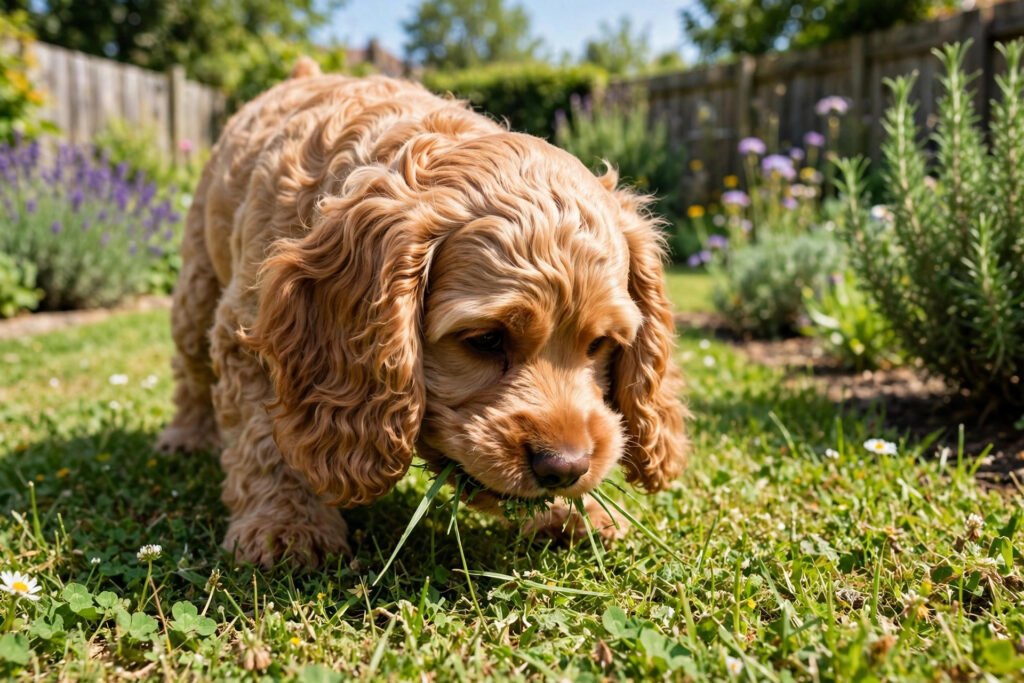
Why your Cockapoo eats grass, poop, sticks and dirt — most of it is harmless, but sticks and rocks can block the gut. Causes, risks and how to stop it.
Quick answer: Cockapoos eat grass, poop, sticks or dirt from curiosity, boredom or habit. Grass is usually harmless, and poop eating (coprophagia) is common — but risky when the poop belongs to another animal. Sticks and rocks are the real danger: they can block the gut. Teach leave-it and call the vet if the habit never stops or your dog vomits.
Every Cockapoo owner has had the moment: you look down on a walk and your dog is grazing like a cow, or has found something in the grass you would rather not name. Gross, worrying, and extremely common in this breed.
Cockapoos explore the world with their mouths — part Cocker Spaniel forager, part clever, easily bored Poodle. Puppies do it most, but plenty of adults keep the habit.
Not everything your Cockapoo eats is equally dangerous. Grass is usually nothing; sticks and rocks can be an emergency. This article decodes each item, explains why your dog does it, and gives you a plan to stop it.
The Decoder: Each Item, Ranked by Risk
| What your Cockapoo eats | Risk level | Main danger |
|---|---|---|
| Grass | Low | Treated lawns |
| Own poop | Low | Usually harmless |
| Other animals’ poop | Medium | Parasites, viruses, toxins |
| Dirt | Low–medium | Chemicals, parasites, large amounts clogging the gut |
| Mulch and paper | Medium | Some mulches toxic; large amounts of paper can block |
| Sticks and rocks | High | Splinters, choking, intestinal blockage |
That table is the article in short. Grass only? Relax — with one check. Sticks or rocks? Act now.
Grass: Usually Harmless, With One Exception
Grass is the least concerning item on the list, and the one owners worry about most. A healthy Cockapoo nibbling grass is normal, not a sign of illness.
The myth is that dogs eat grass to make themselves vomit. Research cited by Paws and Learn puts that figure under 10%. Most do it for simpler reasons: they like the texture, they are bored, or they are foraging for fiber. Grass has no nutritional value and cannot be digested, but grazing seems to satisfy something — taste, texture, or just something to do.
The one real exception is a treated lawn. Grass sprayed with fertilizer, weed killer or pesticide is not safe to eat. If you do not know whether a lawn has been treated, keep your Cockapoo off it — the same goes for a park after the maintenance crew has been through.
If your Cockapoo suddenly starts eating large amounts of grass, especially with vomiting, diarrhea, lethargy or loss of appetite, see the vet section below — and our Cockapoo vomiting and upset stomach guide covers what to do first.
Poop: Coprophagia, the Disgusting but Common Habit
Poop eating has its own medical name — coprophagia — which tells you how common it is. It is the habit owners find hardest to accept, and the one that usually matters least.
Why do they do it? Puppies copy their mother, who eats puppy poop to keep the den clean. Some do it from boredom or being left alone. Some are scavengers by instinct. And some do it because a medical problem makes them hungrier than normal — diabetes, thyroid disease and Cushing’s disease can all show up as poop eating.
The key distinction is whose poop it is. Eating their own poop is generally harmless, however unpleasant. Eating another dog’s poop, or wild animals’ poop, is a real concern: parasites, viruses and toxins pass through feces, and that is how a Cockapoo picks up worms. Cat poop is a particular favorite, and it carries the same risk. If your Cockapoo is a regular poop eater, keep its deworming current: our Cockapoo worms and deworming guide covers the schedule, signs and prevention.
The fastest fix is the least glamorous: clean it up. Pick up your Cockapoo’s poop immediately, every time, and block the litter box with a baby gate or a top-entry box. On walks, keep the leash short where other dogs toilet and practice leave-it (below) until it is automatic. Scolding after the fact does nothing — your dog cannot connect a punishment now with a mouthful five minutes ago — and it can make the habit secretive instead.
Sticks, Rocks and Dirt: The Dangerous One
This is the section that matters most. Grass and poop are mostly a disgust problem. Sticks and rocks are a medical problem.
A stick can splinter as your Cockapoo chews it, cutting the mouth and throat. A piece swallowed whole can lodge in the stomach or intestines and cause a blockage — a surgical emergency. Rocks are worse: they never break down, and a rock big enough to swallow is big enough to block. Paws and Learn is blunt: sticks and rocks are very much a problem if one gets stuck in the intestines. Large amounts of dirt can clog the gut the same way.
Some woods are also poisonous — buckeye, chestnut and oak are named on the Cockapoo-specific page. And dirt can carry chemicals from treated soil, parasites, and whatever was dropped or buried in it.
Why do Cockapoos do it? Puppies explore with their mouths and swallow things by accident. Adults often do it out of habit: a heavy chewer that shredded sticks graduates to swallowing them. And anemia (low red blood cell count) can drive a dog to seek minerals in soil, which is why persistent dirt eating deserves a vet check, not just training: the Dial A Vet Q&A from this month notes it can point to anemia, gastrointestinal upset or pica, and advises a vet visit if the habit persists.
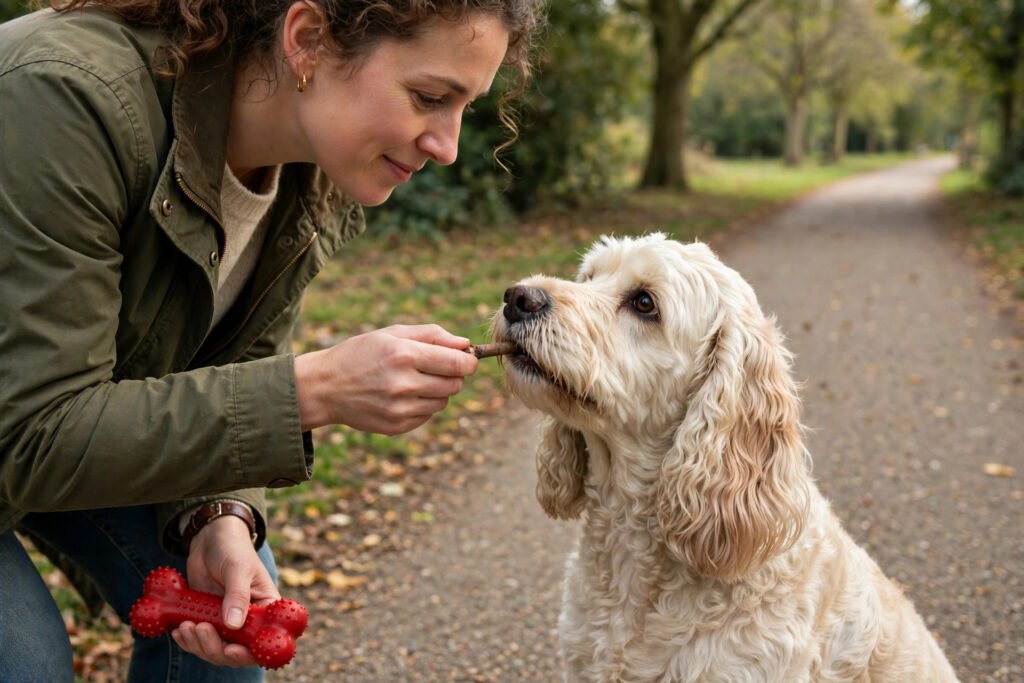
Never chase your Cockapoo to get a stick out of its mouth — chasing turns it into a game and teaches your dog to swallow faster. Instead, trade: offer a high-value treat or a safe chew toy, say “drop it,” and reward the swap. Practice that trade at home with boring objects first.
 CockapooDaily
Mulch and Paper: The Middle Ground
Mulch and paper sit between the harmless and the dangerous, and both are common in a Cockapoo’s world.
Mulch is tempting because it smells interesting and is everywhere in gardens and parks. Most plain wood mulch passes through in small amounts, but some mulches are chemically treated, and cocoa-shell mulch is toxic to dogs — it contains theobromine, the same compound that makes chocolate dangerous. Choose a dog-safe option for your own garden and keep your Cockapoo off freshly laid beds.
Paper and tissues are a texture thing: many Cockapoos, especially puppies, love shredding them. Small amounts usually pass without trouble, but a large wad can block the gut, and bathroom tissues can carry cleaning chemicals. Keep bins lidded and tissues out of reach, and give your dog something legal to shred — a cardboard box with treats hidden inside does the same job safely.
Why Your Cockapoo Does It: The Causes
Behind every item is one of a handful of causes. Finding the cause is what makes the fix stick.
Boredom. This is the biggest one: smart, social dogs that need attention, play and mental work every day. A Cockapoo left alone in the yard with nothing to do will find its own entertainment — and eating the yard is the entertainment at hand. If the habit happens mostly when your dog is alone or under-exercised, boredom is your prime suspect. Our Cockapoo boredom and enrichment guide has the signs and fixes that work.
Habit. Puppy curiosity can harden into a habit, especially if it was ever rewarding. A Cockapoo that found a tasty stick once will check every stick, and a dog that got attention — even horrified attention — for eating poop learned that poop eating gets a reaction. Habits need retraining, not just prevention.
Nutritional gaps. A diet short on fiber or missing nutrients can push a dog to forage for what it lacks. This is the least common cause in a dog fed a complete commercial food. A vet can rule it out with a blood test and a diet review.
Anemia and pica. Pica is the medical term for craving and eating things with no nutritional value. It can be behavioral, but it can also be medical: anemia (low blood count) is the classic example, with dogs seeking minerals in dirt. If dirt or rock eating is new, intense or constant, ask the vet to check for anemia before assuming it is just a bad habit.
Puppy exploration and teething. Puppies use their mouths the way toddlers use their hands. The chewing and mouthing stage peaks around four to five months, as baby teeth fall out and adult teeth come in. Most grow out of swallowing random objects by twelve to twenty-four months — if yours has not, that is when vets start calling it pica. Our guide to why your Cockapoo chews everything covers the chewing side.
Stress and anxiety. A stressed Cockapoo may eat non-food items as a coping behavior. Separation anxiety, a house move or a new pet can trigger it. If the habit started with a big change, treat the stress, not just the symptom.
What to Do: The Practical Plan
Teach leave-it properly. This is the single most useful command for a Cockapoo that eats things off the ground. Start indoors: hold a treat in a closed fist, wait for your dog to stop nosing it, say “leave it,” then reward from your other hand. Build up to treats on the floor, then boring objects outside, then the real thing — a stick on a walk. Practice five minutes at a time. The goal is a dog that looks at you when it finds something instead of swallowing it.
Trade, never chase. When your Cockapoo has something in its mouth, offer a swap: a high-value treat, a favorite toy, a piece of chicken. Say “drop it” as the dog releases the item, then reward. Chasing teaches your dog to run and swallow; trading teaches it that giving things up pays better.
Clean up fast. Pick up poop immediately, every time. Clear sticks and rocks from your yard. Keep the litter box behind a gate. Management is not cheating — it works from day one while training catches up.
Fill the boredom gap. A tired Cockapoo does not eat the garden. Add a sniffy walk, a puzzle feeder, a frozen Kong, or ten minutes of training games, and rotate toys so old ones feel new. If the habit happens when you are out, a food puzzle left behind beats an empty yard.
Check the diet. Feed a complete, balanced food in the right amount. If you feed homemade or raw, ask your vet to review it. Do not add supplements on your own: extra fiber or minerals without a diagnosis can cause new problems.
Supervise the risky places. Until leave-it is reliable, keep your Cockapoo leashed where sticks, rocks or mulch are thick, and use a basket muzzle if your dog is a determined rock swallower. A muzzle is not a punishment — it lets your dog walk freely without a trip to the emergency vet.
When to Call the Vet
Most grass nibbling needs no vet at all. Call your vet promptly if you see any of these:
- Sticks, rocks or large amounts of dirt eaten regularly, or something swallowed that it cannot pass
- The habit is new, sudden or constant, especially in an adult that never did it before
- Vomiting, diarrhea, lethargy, loss of appetite or belly pain alongside the eating — our Cockapoo diarrhea and upset stomach guide covers the stomach symptoms
- Straining to poop, no poop at all, or blood in vomit or stool
- Pale gums, weakness or rapid tiring — possible anemia
A blockage is an emergency: repeated vomiting, a swollen or painful belly, and no bowel movements after swallowing a stick or rock mean the emergency vet, not a wait until morning. Tell the vet exactly what your dog ate and when — and if you can, bring a matching stick or rock so they can judge the size.
Frequently asked questions
Is it normal for a Cockapoo to eat grass?
Yes, very normal. Most Cockapoos nibble grass sometimes, and it is usually harmless. Fewer than one in ten does it because of an upset stomach. Worry only if the grass is chemically treated, or if heavy grass eating comes with vomiting, diarrhea or lethargy.
Why does my Cockapoo eat poop?
Poop eating, or coprophagia, is common and usually comes from boredom, habit, puppy behavior copied from the mother, or scavenging instinct. Eating its own poop is generally harmless; other animals’ poop is riskier because of parasites. Clean up immediately and keep deworming current.
Can eating sticks kill a Cockapoo?
It can. Sticks can splinter and cut the mouth and throat, and a swallowed piece can block the intestines, which needs emergency surgery. Rocks are just as dangerous because they never break down. Never chase your dog for a stick — trade for a treat or toy, and call the vet if your dog swallowed one.
Why does my Cockapoo eat dirt?
Dirt eating can come from curiosity, boredom, stress or habit, and puppies do it often. But persistent dirt eating can also point to anemia or a nutritional deficiency. If your Cockapoo eats dirt constantly, or with vomiting, diarrhea or lethargy, get a vet check rather than training it out.
How do I stop my Cockapoo eating everything on walks?
Teach a solid leave-it, starting indoors and building up to real objects outside. Trade treats for anything in your dog’s mouth instead of chasing. Keep the leash short in high-risk spots, clean up poop fast, and add puzzle feeders and sniffy walks so boredom stops driving it.
Conclusion
Your Cockapoo eats grass, poop, sticks and dirt for different reasons — curiosity, boredom, habit, or a medical cause like anemia. Grass is usually harmless if the lawn is untreated. Poop eating is common and mostly a hygiene problem, except when the poop belongs to another animal. Sticks and rocks are the real danger: they can splinter or block the gut.
The fix is training plus management: a reliable leave-it, trading instead of chasing, fast clean-up, and enough play and mental work that your dog stops entertaining itself with the yard. If the habit is constant or sudden, or comes with vomiting, diarrhea or lethargy, call the vet — that is the line between a gross habit and a health problem.
Leave a Reply